
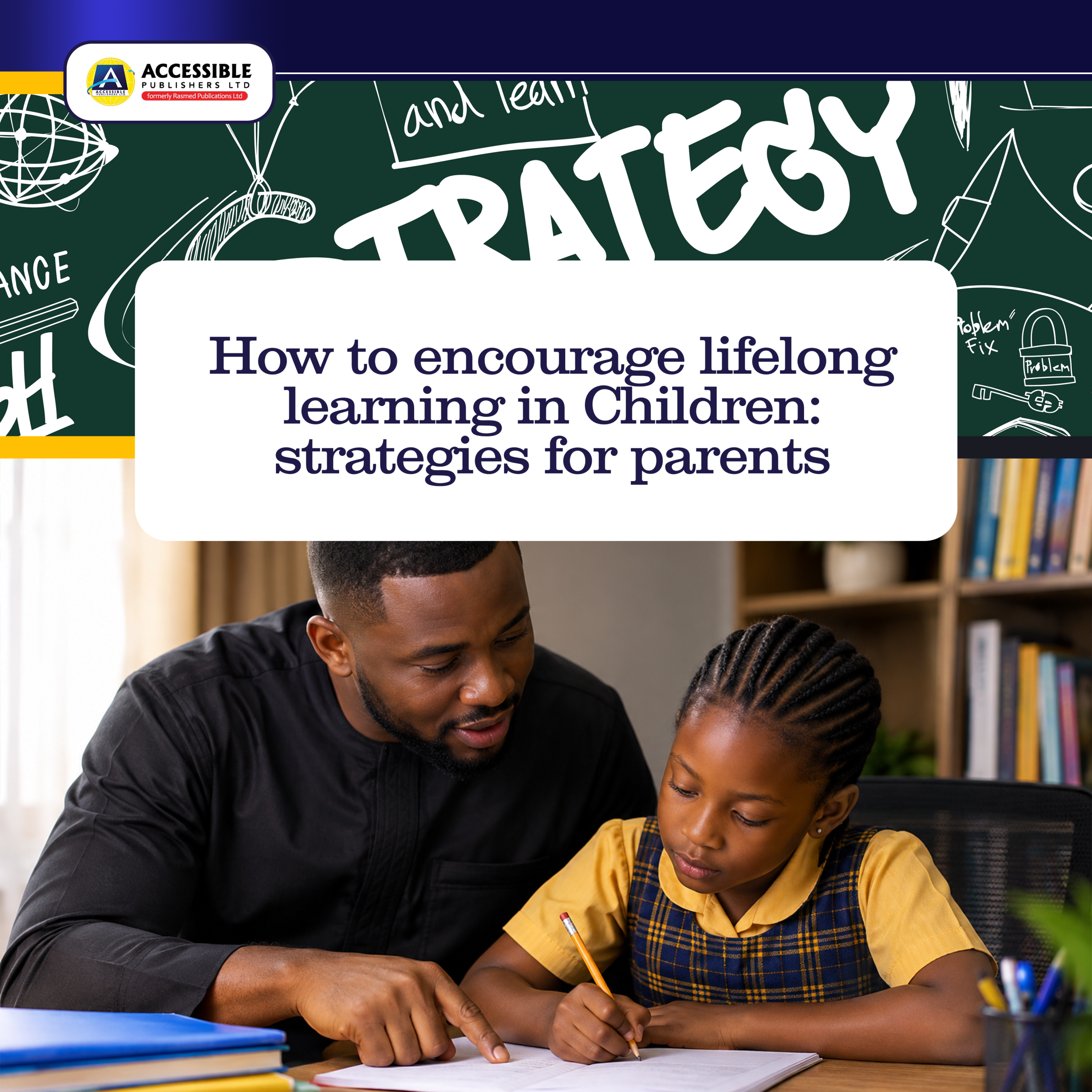
A child who loves learning does not stop learning when the school bell rings.
They continue asking questions at the dinner table, wondering how things work, picking up books because they want to know what happens next, experimenting with new ideas, and finding lessons in everyday experiences. This is the foundation of lifelong learning: the desire and ability to keep acquiring knowledge, skills and understanding throughout life.
For parents, raising a lifelong learner is not about making a child study for longer hours or constantly pushing them to achieve higher grades. It is about helping them develop curiosity, confidence, independence and a genuine interest in discovering new things.
As education continues to evolve, these qualities are becoming increasingly important. The knowledge a child learns today may not be enough for the challenges they will face tomorrow. However, a child who knows how to learn, ask questions, seek information and adapt can continue growing long after formal education ends.
As John Dewey famously said, “Education is not preparation for life; education is life itself.”
So, how can parents nurture this attitude towards learning from childhood?
Understanding Lifelong Learning
Lifelong learning is the continuous process of gaining knowledge, skills, values and experiences throughout a person’s life. It goes beyond what happens in the classroom and includes learning through reading, conversations, observation, creativity, technology, hobbies, experiences and everyday problem-solving.
For children, lifelong learning can begin with something as simple as asking, “Why does it rain?” or “How does a phone know where I am?”
Instead of dismissing these questions or always providing immediate answers, parents can use them as opportunities to explore and learn together.
Lifelong learning also teaches children that not knowing something is not a weakness. It is an invitation to discover something new.
A child who develops this mindset may become more willing to:
- Ask questions and seek answers.
- Read beyond school requirements.
- Explore new interests and hobbies.
- Learn from mistakes.
- Research unfamiliar topics.
- Try new skills.
- Solve problems independently.
- Adapt when faced with new situations.
The goal is therefore not simply to raise children who perform well in examinations, but children who remain curious about the world around them.
Creating a Supportive Learning Environment at Home
Children do not only learn in classrooms. The home can also become an important learning environment.
A supportive home does not have to be filled with expensive educational materials or a large personal library. What matters most is creating an atmosphere where learning is encouraged, questions are welcomed, and mistakes are treated as opportunities to improve.
1. Make reading part of everyday life
Reading is one of the simplest ways to develop lifelong learning habits.
Parents can provide children with age-appropriate storybooks, educational books, magazines and other reading materials. Allow children to explore topics that genuinely interest them instead of making every reading session feel like another school assignment.
A child who enjoys reading about animals today may become interested in science tomorrow. Another who loves stories may eventually develop an interest in history, culture or creative writing.
Even setting aside 15–20 minutes for reading each day can help create consistency.
2. Create a space where questions are welcome
Children are naturally curious. When a child asks a seemingly random question, it can be tempting to respond quickly or tell them to stop asking too many questions.
Instead, parents can turn questions into learning opportunities.
If you do not know the answer, say so.
You can tell your child, “I don’t know. Let’s find out together.”
This teaches an important lesson: learning does not stop simply because you do not have an answer.
3. Let everyday activities become learning opportunities
Learning does not always require a textbook.
Cooking can teach children about measurements and following instructions. Shopping can introduce basic mathematics and budgeting. Gardening can teach them about plants and the environment. A trip to a museum, cultural centre, farm or historical site can turn an ordinary outing into an educational experience.
Parents can also involve children in simple household decisions and problem-solving activities that encourage them to think critically.
Strategies to Encourage Curiosity and Interest
Curiosity is one of the strongest foundations of lifelong learning. When children are genuinely interested in something, learning becomes less of a chore and more of an adventure.
Here are practical ways parents can nurture that curiosity.
1. Ask more open-ended questions
Instead of always testing children with questions that have one correct answer, ask questions that encourage them to think.
For example:
- “Why do you think that happened?”
- “What would happen if we changed this?”
- “How do you think we can solve this?”
- “What would you do differently?”
- “What would you like to learn about this?”
Such questions encourage children to explain their thoughts rather than simply search for the “right” answer.
2. Follow their interests
Pay attention to what naturally captures your child’s attention.
Does your child love drawing? Encourage art.
Are they fascinated by football? Explore the mathematics, history, geography and science behind the sport.
Do they enjoy taking things apart? Introduce them to age-appropriate science and technology activities.
A child’s interest can become a doorway to broader learning.
3. Encourage learning through play
Play is not the opposite of learning. For children, play can be one of the most effective ways to explore ideas and develop skills.
Puzzles, board games, building blocks, drawing, storytelling, educational games and simple experiments can encourage creativity, communication, logical reasoning and problem-solving.
Parents can also participate in these activities rather than leaving children to engage with them alone.
4. Allow children to make mistakes
A child who is afraid of making mistakes may eventually become afraid of trying.
Rather than immediately correcting every error, give children opportunities to think about what went wrong and how they can improve.
The message should be clear: mistakes are part of learning.
This helps children develop resilience and become more comfortable with challenges.
5. Introduce children to different experiences
Children can learn from people, places and experiences outside their immediate environment.
Take them to libraries, cultural events, educational exhibitions, bookstores, farms, museums and community activities where possible. Encourage conversations with people who have different skills and professions.
These experiences can help children discover interests they may never encounter in a traditional classroom.
Utilising Technology Wisely
Technology has become an important part of how children learn, communicate and access information. From educational videos and digital libraries to interactive learning platforms, technology can open the door to countless learning opportunities.
However, using technology for learning is not the same as simply giving a child a phone or tablet.
Parents need to help children develop healthy and purposeful digital habits.
1. Choose educational content intentionally
Not all digital content is educational or appropriate simply because it contains information.
Parents should help children identify reliable websites, educational platforms, videos, digital books and learning applications that match their age and interests.
Where possible, choose resources that encourage children to think, practise, create or solve problems rather than simply watch passively.
2. Balance screen time with other forms of learning
Digital learning should complement, not completely replace, reading physical books, outdoor activities, conversations, creative play and hands-on experiences.
A child can watch a video about plants, for example, and then apply what they have learned by growing a small plant at home.
This turns screen-based learning into a practical experience.
3. Teach children how to evaluate information
One of the most important digital skills children can develop is knowing that not everything they see online is true.
As children grow older, parents should teach them to ask:
- Who created this information?
- Is the source trustworthy?
- Can the information be verified elsewhere?
- Is this fact or someone’s opinion?
- When was the information published?
These skills are particularly important in an age where children have access to enormous amounts of information at their fingertips.
4. Learn alongside your child
Technology can also create opportunities for parents and children to learn together.
Watch an educational video, explore a digital book, research an interesting question or try a new educational application together. Instead of technology becoming something that isolates the child, it can become a shared learning experience.
How To Encourage Children to Become Independent Learners
One of the ultimate goals of lifelong learning is independence.
As children grow, parents should gradually move from doing things for them to helping them learn how to do things for themselves.
If a child asks a question, parents do not always need to provide the answer immediately. They can show the child how to find reliable information.
If a child struggles with a school assignment, parents can guide them through the process rather than simply providing the solution.
This helps children develop confidence in their own ability to learn and solve problems.
Parents can also encourage children to set small learning goals. A child might decide to read two books in a month, learn ten new words, understand a new mathematical concept, learn how to draw something new or explore a topic they have always wondered about.
These small goals help children see learning as something they can actively manage.
Be the Learning Example Your Child Needs
Children learn a great deal by watching the adults around them.
If parents read, ask questions, learn new skills, admit when they do not know something and remain curious about the world, children are more likely to see learning as a normal part of life.
You can share something interesting you learned during the day. Read a book in your free time. Learn a new recipe together. Pick up a new skill. Discuss current events in an age-appropriate way.
The lesson is simple: learning is not something that ends with graduation.
Final Thoughts
Encouraging lifelong learning in children does not require parents to have all the answers. It requires them to create an environment where children feel safe to ask questions, explore ideas, make mistakes and try again.
From reading together and having meaningful conversations to using technology wisely and turning everyday activities into learning experiences, parents have countless opportunities to nurture curious and confident learners.
The most important thing is to help children understand that learning is not simply something they do to pass examinations. It is a lifelong tool that can help them understand themselves, their communities and the world around them.
When children learn to enjoy the process of discovering something new, they carry that curiosity far beyond the classroom—and that is one of the most valuable lessons a parent can give.
Check out our literature catalogue to discover an array of titles that can help motivate children to keep turning the pages. It’s time to explore and embark on an enriching literary journey.
Click this link to learn more about us here!