
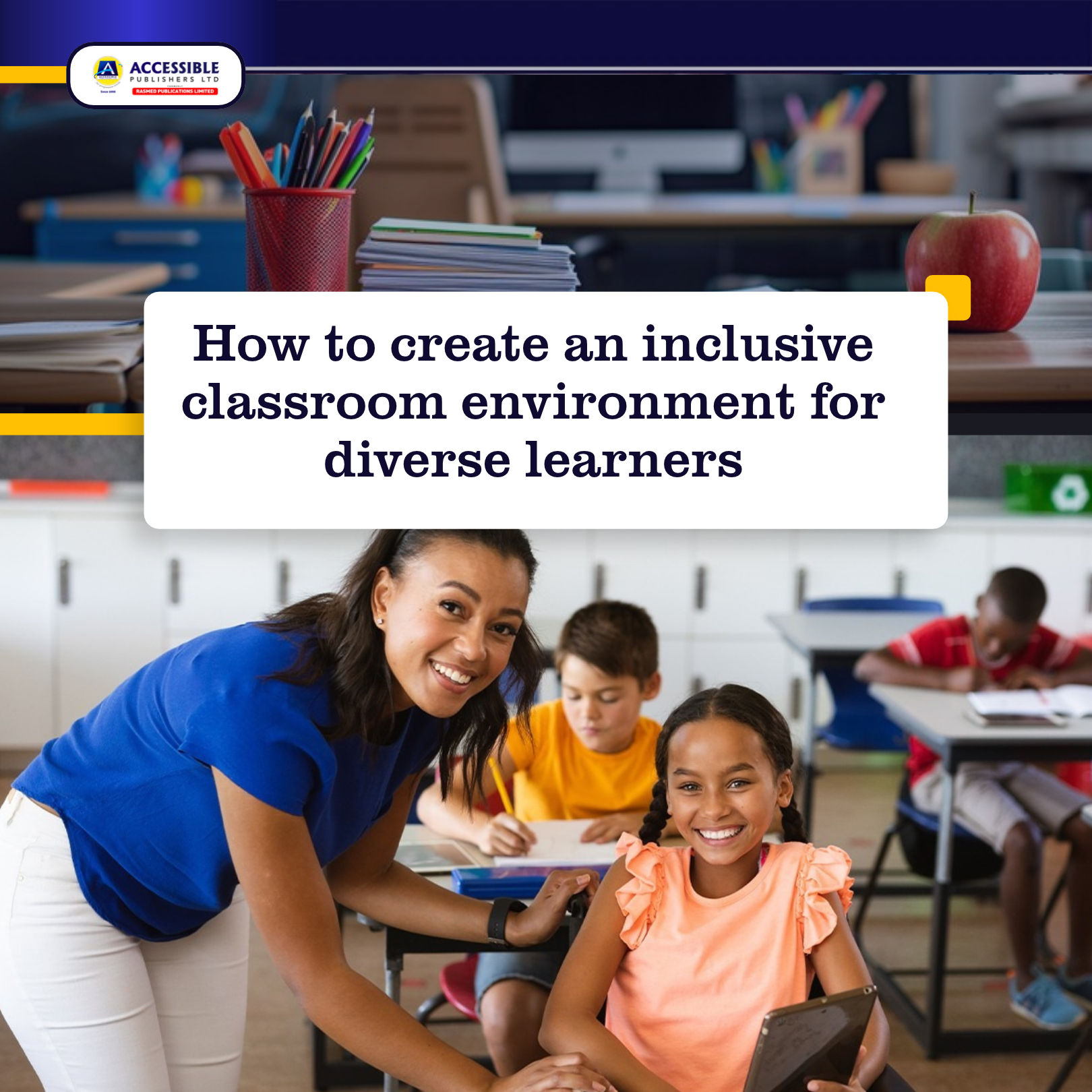
Walk into any classroom, and you will find more than just students sitting behind desks. You will find different personalities, abilities, backgrounds, learning preferences, experiences, interests, and levels of confidence—all trying to learn in the same space.
One student may understand a new concept after a single explanation, while another may need a practical demonstration. One may confidently raise a hand to answer a question, while another understands the lesson but struggles to speak in front of others. Some learners may have physical, sensory, language, or learning needs that require additional support.
This diversity is not a problem to be solved. It is a reality to be understood and supported.
An inclusive classroom creates room for every learner to participate, contribute, and make meaningful progress regardless of their differences. As education continues to evolve, creating such classrooms is becoming increasingly important for schools that want learning to be accessible and meaningful to all students.
“Every student can learn, just not on the same day or in the same way.”
So, how can teachers create an inclusive classroom environment where diverse learners feel seen, respected, and supported?
Understanding Diversity in the Classroom
The first step towards inclusion is recognising that learners are different.
Classroom diversity goes beyond differences in age or academic performance. Students may come from different cultural, socioeconomic, linguistic, and family backgrounds. They may also have different abilities, personalities, interests, learning preferences, and levels of prior knowledge.
For example, in the same classroom, a teacher may have:
- Students who learn quickly and others who need more time.
- Learners who prefer visual explanations and those who learn better through listening or practical activities.
- Students who speak different languages at home.
- Learners with physical or sensory disabilities.
- Students with different levels of confidence and classroom participation.
- Learners whose educational experiences outside school differ significantly.
Understanding these differences helps teachers avoid using a single approach for every learner.
Know Your Learners
Teachers can begin by paying attention to how students respond to lessons, activities, questions, group work, and assessments.
Simple observations can reveal important information. Who participates most often? Who rarely speaks? Who performs better during practical activities than written tests? Who needs additional explanations?
Teachers can also encourage students to share their interests, strengths, challenges, and preferred ways of learning.
The goal is not to label students but to understand what can help each learner engage more effectively with the lesson.
Creating an Inclusive Class Culture
An inclusive classroom is built on respect, belonging, and participation.
Students are more likely to engage with learning when they feel safe enough to ask questions, make mistakes, express their opinions, and interact with their classmates without fear of ridicule.
Establish Respectful Classroom Rules
Classroom rules should make it clear that every learner deserves to be treated with dignity.
Teachers can establish simple expectations such as:
- Listen when someone is speaking.
- Do not laugh at another student’s mistake.
- Give everyone an opportunity to participate.
- Respect different opinions and backgrounds.
- Ask questions when you do not understand.
- Help classmates without making them feel inferior.
These expectations should not simply be written on a classroom wall. Teachers should model them consistently in their own interactions with students.
Encourage Every Voice
Participation should not be limited to the students who are always the first to raise their hands.
Teachers can use pair discussions, small-group activities, written responses, anonymous questions, and other participation methods to give quieter learners opportunities to contribute.
A student who does not enjoy speaking in front of the entire class may have valuable ideas that become visible in a smaller group.
Make Diversity Part of Learning
Students should be able to see different cultures, experiences, communities, and perspectives represented in classroom discussions and learning materials.
For Nigerian classrooms, this could include examples, stories, names, historical experiences, literature, and real-life situations that reflect the country’s different communities and cultures.
When students see aspects of their experiences represented in what they learn, education can feel more relevant and connected to their lives.
Implementing Teaching Strategies for Diverse Learners
An inclusive classroom does not necessarily require a completely different lesson plan for every student. Instead, teachers can use flexible teaching strategies that provide different ways for learners to understand and demonstrate knowledge.
Use Different Teaching Methods
Rather than relying entirely on lectures or textbook explanations, teachers can combine:
- Visual aids and diagrams
- Storytelling
- Demonstrations
- Discussions
- Group activities
- Practical exercises
- Videos and educational technology
- Reading and writing activities
- Real-life examples
For instance, when teaching a science concept, a teacher might explain the idea verbally, illustrate it on the board, demonstrate it practically, and allow students to discuss what they observed.
This gives learners multiple opportunities to connect with the same concept.
Differentiate Learning Activities
Differentiated instruction involves adjusting aspects of teaching to respond to learners’ different needs.
A teacher could provide additional examples or guided practice for students who need more support while offering extension activities to learners who are ready for greater challenges.
This does not mean lowering expectations for some students. It means providing appropriate pathways that help different learners reach the intended learning objectives.
Encourage Collaborative Learning
Group work can help students learn from one another when it is carefully structured.
Teachers can create diverse groups and assign meaningful roles so that participation does not fall entirely on one or two students.
For example, students can take turns as discussion leaders, note-takers, presenters, researchers, or timekeepers.
Collaborative activities can also help students develop communication, teamwork, empathy, and problem-solving skills.
Use Technology Where Appropriate
Educational technology can provide additional ways for students to access learning materials and practise concepts.
Digital textbooks, educational videos, interactive quizzes, computer-based tests, audio resources, and learning platforms can complement classroom teaching.
However, technology should support inclusion rather than become another barrier. Teachers should consider whether students have the necessary devices, connectivity, digital skills, and support to use the tools effectively.
Assessing and Adapting the Learning Environment
Creating an inclusive classroom is not a one-time activity. Teachers need to continuously observe what is working, identify barriers, and make adjustments.
Use Different Forms of Assessment
A student’s understanding should not always be determined by one type of test.
Depending on the learning objective, teachers can use:
- Class discussions
- Short quizzes
- Projects
- Presentations
- Practical demonstrations
- Written assignments
- Group tasks
- Oral responses
- Individual exercises
Using different assessment methods can give students more opportunities to demonstrate what they know and understand.
Give Constructive Feedback
Feedback should help students understand what they did well, what needs improvement, and what they can do next.
Instead of simply saying “wrong,” a teacher can explain the mistake and guide the learner towards the correct approach.
Constructive feedback turns mistakes into learning opportunities rather than sources of embarrassment.
Ask Students for Feedback
Teachers do not have to guess whether their classroom is inclusive. Students can provide useful insights.
Occasionally ask questions such as:
- Which activities help you understand lessons better?
- What makes it difficult for you to participate?
- What would make the classroom more comfortable for learning?
- Which topics or activities do you enjoy most?
- Is there anything you wish your teacher explained differently?
Their responses can reveal barriers that may not be immediately obvious to the teacher.
Keep Adapting
An effective inclusive classroom is one that evolves with its learners.
A strategy that works well for one class may not work equally well for another. Even within the same class, students’ needs can change throughout the academic year.
Teachers should therefore remain observant, flexible, and willing to adjust their teaching methods, classroom arrangements, learning resources, and assessment approaches.
Building A Classroom Where Every Learner Belongs
Inclusion is not about treating every student exactly the same. It is about recognising that students may need different forms of support to participate meaningfully and achieve their potential.
When teachers understand their learners, create respectful classroom cultures, use flexible teaching strategies, and continuously assess and adapt their approach, they create an environment where differences do not become barriers to learning.
As the saying goes, “A classroom becomes truly inclusive when every learner knows that they belong.”
For teachers and school leaders, the goal is therefore not simply to have a classroom where every student is physically present. It is to build a learning environment where every student has an opportunity to participate, learn, contribute, and grow.
That is the foundation of meaningful and inclusive education.
Check out our literature catalogue to discover an array of titles that can help motivate children to keep turning the pages. It’s time to explore and embark on an enriching literary journey.
Click this link to learn more about us here!