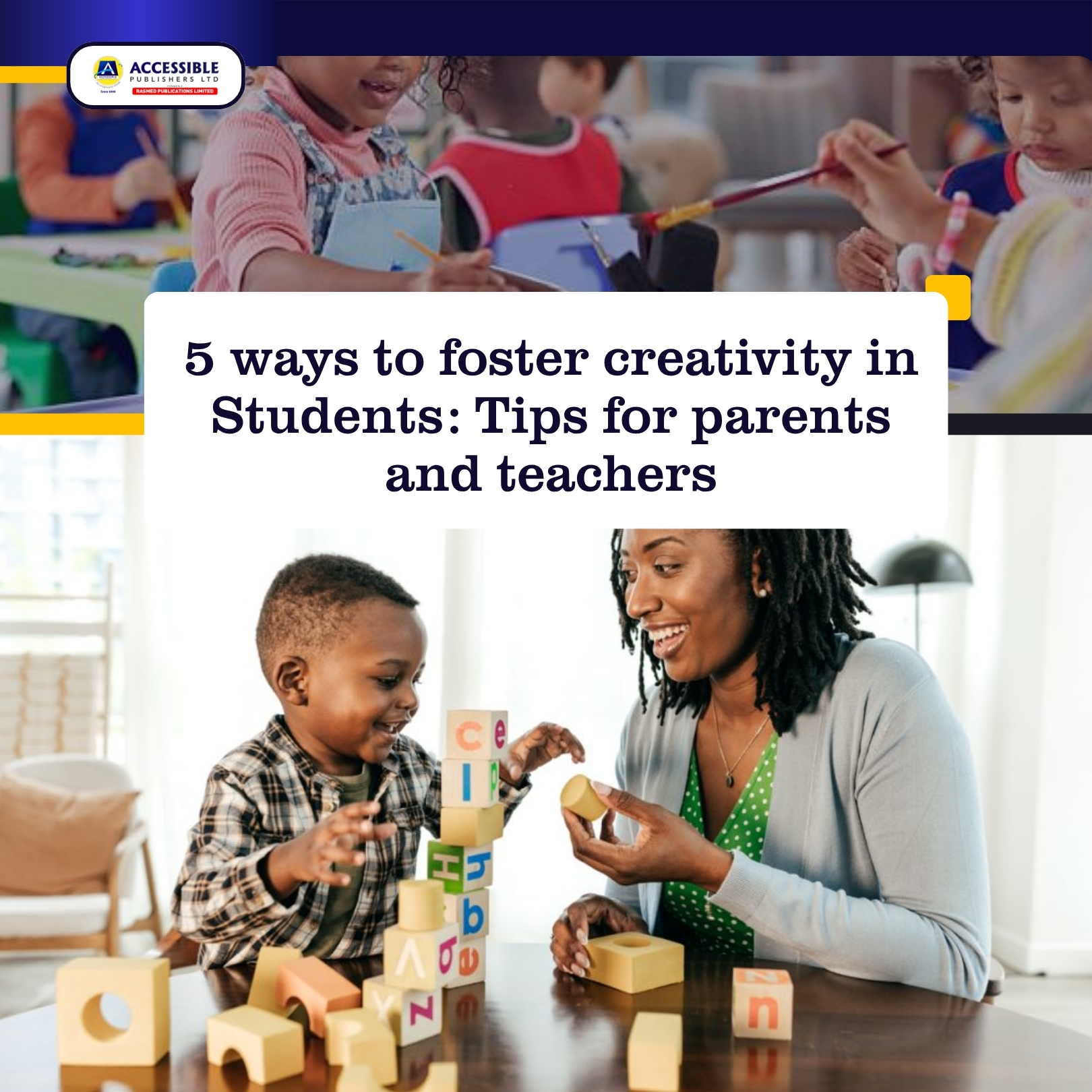
In today’s rapidly changing world, academic excellence alone is no longer enough. Students need the ability to think independently, solve problems creatively, communicate ideas confidently, and adapt to new situations. These are the skills that help them succeed not just in school, but throughout life.
Creativity is often associated with art, music, or writing, but it goes far beyond these areas. A creative student is one who can explore different perspectives, ask meaningful questions, develop original ideas, and find innovative solutions to everyday challenges.
As the famous educator Sir Ken Robinson once said:
“Creativity is as important in education as literacy, and we should treat it with the same status.”
The good news is that creativity is not a talent reserved for a select few. It is a skill that can be nurtured through intentional guidance, encouragement, and the right learning environment. Parents and teachers play a significant role in helping children discover and develop their creative potential.
In this article, we explore why creativity matters and share practical ways parents and teachers can inspire students to become confident, imaginative, and lifelong learners.
Understanding Creativity
Creativity is the ability to generate original ideas, think critically, and approach situations in new and meaningful ways. It involves curiosity, imagination, innovation, and the confidence to explore possibilities beyond the obvious.
For students, creativity means more than drawing beautiful pictures or writing poems. It includes finding unique ways to solve mathematics problems, designing science projects, developing business ideas, asking insightful questions, creating stories, or inventing practical solutions to everyday challenges.
When creativity is encouraged, students become active learners rather than passive recipients of information.
Why Creativity Is Important for Students
Creativity plays a vital role in preparing students for both academic success and future careers. It empowers them to become independent thinkers who can thrive in an ever-evolving world.
Some of the benefits of creativity include:
1. Enhances Problem-Solving Skills
Creative students learn to view challenges from different perspectives and develop practical solutions instead of giving up easily.
2. Builds Confidence
When students are encouraged to express their ideas freely, they become more confident in their abilities and are willing to take on new challenges.
3. Improves Academic Performance
Creative learning makes lessons more engaging and memorable. Students who actively participate in learning often retain information better.
4. Encourages Innovation
Today’s world rewards innovation. Whether in technology, business, education, or entrepreneurship, creativity helps students become future innovators and leaders.
5. Supports Emotional Development
Creative activities such as storytelling, music, drawing, drama, and writing provide healthy ways for students to express emotions and build resilience.
As Albert Einstein wisely noted:
“Creativity is intelligence having fun.”
5 Ways to Foster Creativity in Students
1. Encourage Curiosity and Questions
Curiosity is the foundation of creativity. Instead of providing immediate answers to every question, encourage students to investigate, observe, and discover answers themselves.
Parents can ask questions like:
- “What do you think will happen if…?”
- “Why do you think this works?”
- “Can you think of another way to solve it?”
Teachers can also create classroom discussions where students feel comfortable sharing ideas without fear of being wrong.
2. Give Students Opportunities to Explore Their Interests
Children are naturally creative when they engage in activities they genuinely enjoy.
Whether it is reading, coding, painting, music, creative writing, robotics, gardening, photography, or science experiments, allowing students to pursue their interests strengthens both creativity and motivation.
Parents can expose children to different hobbies, while teachers can include project-based learning that allows students to explore topics beyond the curriculum.
Make Reading a Daily Habit
Reading exposes students to new ideas, cultures, perspectives, and possibilities. It stimulates imagination, expands vocabulary, and develops critical thinking.
Provide access to age-appropriate books, novels, biographies, educational magazines, and informational texts.
Encourage students to:
- Imagine different endings to stories.
- Create their own characters.
- Rewrite stories from another character’s perspective.
- Discuss lessons learned from books.
The more students read, the richer their imagination becomes.
4. Allow Room for Experimentation and Mistakes
Many students become afraid to try new ideas because they fear making mistakes.
Parents and teachers should create environments where mistakes are viewed as valuable learning experiences rather than failures.
Celebrate effort, creativity, and improvement—not just perfect results.
For example, after completing a project, ask:
- What worked well?
- What would you do differently next time?
- What did you learn from the experience?
This approach builds resilience and encourages innovative thinking.
5. Integrate Creative Activities into Everyday Learning
Creativity should not be limited to art classes.
Parents and teachers can make learning more engaging by incorporating activities such as:
- Storytelling
- Role-playing
- Debates
- Science experiments
- Educational games
- Model building
- Group projects
- Brainstorming sessions
- Creative writing challenges
These activities encourage collaboration, communication, imagination, and critical thinking while making learning enjoyable.
Practical Tips for Parents
Parents are a child’s first teachers, and the home environment plays a significant role in developing creativity.
Here are a few practical ways parents can help:
- Create a reading-friendly environment with books and educational materials.
- Reduce excessive screen time and encourage hands-on activities.
- Allow children to make age-appropriate decisions independently.
- Praise effort, curiosity, and originality rather than perfection.
- Encourage open conversations and listen to children’s ideas.
- Provide opportunities for creative play using simple household materials.
- Support participation in educational clubs, competitions, and extracurricular activities.
Most importantly, avoid comparing children with others. Every child develops creativity at their own pace.
Strategies for Teachers
Teachers have a unique opportunity to inspire creativity every day in the classroom.
Some effective strategies include:
- Use project-based and inquiry-based learning.
- Encourage group collaboration and peer discussions.
- Ask open-ended questions that require critical thinking.
- Incorporate storytelling and real-life examples into lessons.
- Allow students to present ideas in different formats such as videos, drawings, speeches, or models.
- Create a classroom culture where every idea is respected.
- Recognise and celebrate originality, not just correct answers.
When classrooms become safe spaces for exploration, students become more willing to think creatively.
Overcoming Barriers to Creativity
Despite its importance, several factors can limit creativity in students.
Some common barriers include:
Fear of Failure
Students may avoid trying new ideas because they worry about making mistakes.
Solution: Encourage a growth mindset and remind students that learning often comes through trial and error.
Excessive Focus on Memorisation
An education system centred solely on examinations can discourage creative thinking.
Solution: Balance academic achievement with practical learning experiences, discussions, and creative projects.
Limited Learning Resources
Some schools and homes may lack access to educational materials.
Solution: Creativity does not always require expensive resources. Everyday objects, storytelling, local experiences, and community activities can become valuable learning tools.
Lack of Encouragement
Students thrive when adults believe in their abilities.
Solution: Offer positive feedback, celebrate progress, and create opportunities for students to express themselves confidently.
Conclusion
Creativity is one of the most valuable skills students can develop for success in school, the workplace, and life. It empowers them to think independently, solve complex problems, embrace innovation, and adapt to a constantly changing world.
Parents and teachers do not need expensive resources to nurture creativity. Sometimes, all it takes is providing encouragement, asking thoughtful questions, creating opportunities for exploration, and allowing students the freedom to imagine and create.
By working together, homes and schools can raise learners who are not only academically competent but also curious, confident, and capable of shaping a better future.
After all, today’s creative students are tomorrow’s innovators, leaders, and changemakers.
Check out our literature catalogue to discover an array of titles that can help motivate children to keep turning the pages. It’s time to explore and embark on an enriching literary journey.
Click this link to learn more about us here!