
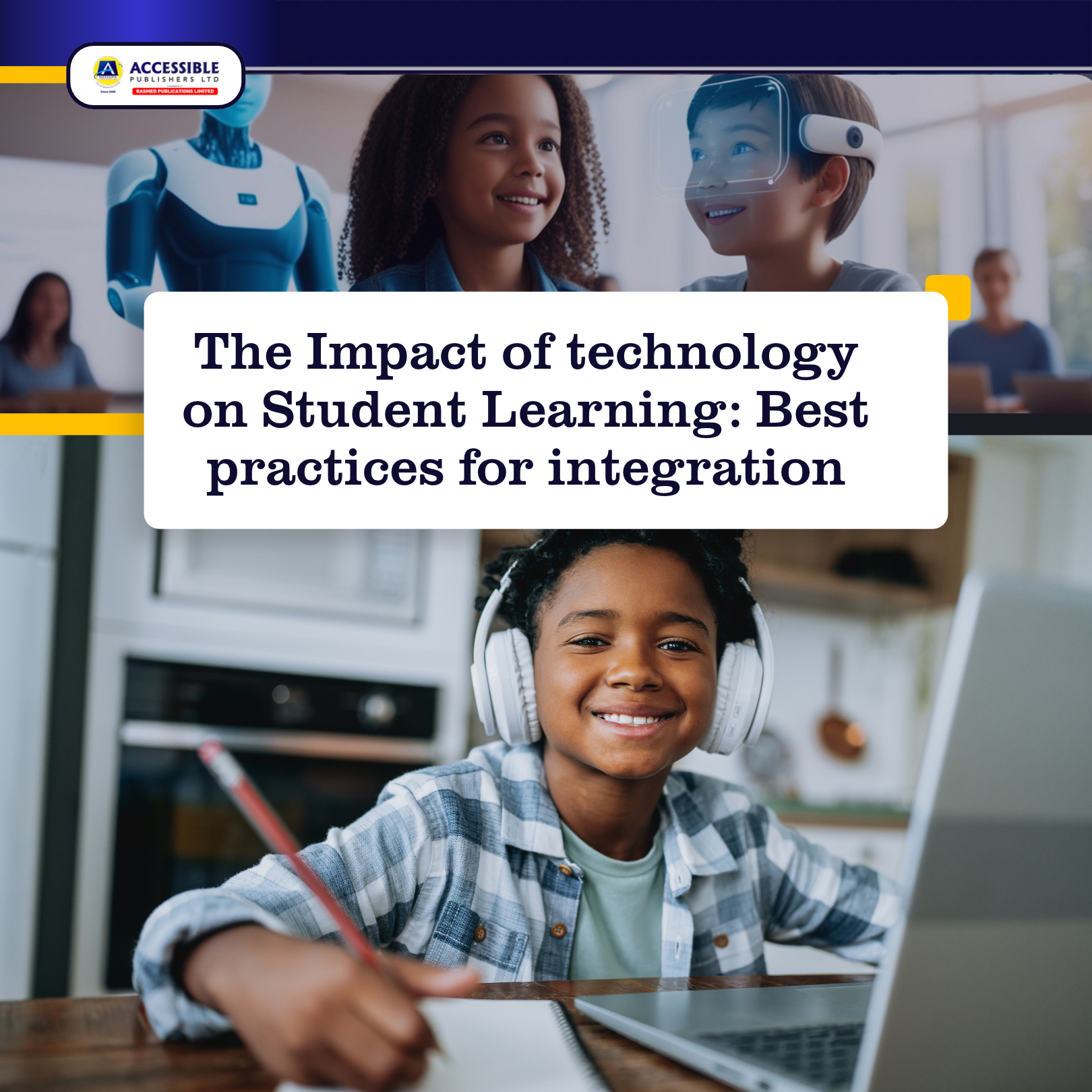
Technology has changed the way we live, communicate, work—and increasingly, the way we learn. From interactive learning platforms and educational apps to digital textbooks, virtual classrooms, artificial intelligence and computer-based tests, technology is becoming an important part of modern education.
For today’s students, learning is no longer limited to the four walls of a classroom or the pages of a textbook. A student can watch a science experiment, practise mathematics through an interactive platform, access an eBook, collaborate with classmates online or take a computer-based test—all with the help of technology.
But having technology in the classroom does not automatically mean better learning. The real value of educational technology lies in how intentionally it is used to support teaching and improve students’ learning experiences.
As education continues to evolve, teachers, parents, school owners and education stakeholders must understand both the opportunities and challenges technology brings. So, what is the impact of technology on student learning, and what are the best practices for integrating it effectively?
Understanding the Role of Technology in Student Learning
Technology can transform the learning experience when it is used as a tool to complement effective teaching rather than replace it.
Makes Learning More Interactive
Traditional teaching methods can sometimes make students passive participants in the learning process. Technology can make lessons more engaging by introducing videos, animations, simulations, educational games, interactive quizzes and digital activities.
For example, instead of simply reading about the solar system, students can explore an interactive model of the planets. Instead of solving mathematics problems only with pen and paper, they can use digital exercises that provide immediate feedback.
This interactivity can help students develop greater interest in lessons and encourage active participation.
Provides Access to More Learning Resources
One of the greatest benefits of technology in education is access to information. Students can access digital libraries, educational websites, eBooks, online courses, recorded lessons and other learning resources beyond what is available in their physical classroom.
This can be particularly valuable for students who want to explore a topic further or learn at their own pace.
Supports Personalised Learning
Students do not all learn at the same pace or in exactly the same way. Technology can help teachers provide learning experiences that better respond to individual needs.
Digital learning platforms can allow students to practise difficult topics repeatedly, receive instant feedback and progress through activities according to their level of understanding.
For teachers, digital tools can also provide useful information about students’ performance and help identify areas where additional support may be needed.
Improves Collaboration and Communication
Technology can create new opportunities for students to collaborate. They can work together on digital projects, share ideas, conduct research and communicate with teachers and classmates through appropriate educational platforms.
When properly guided, these activities can help students develop communication, teamwork, creativity and problem-solving skills.
Builds Digital Literacy
Students are growing up in an increasingly digital world. Learning how to search for reliable information, use digital tools responsibly, communicate online and evaluate digital content is becoming an essential part of education.
Therefore, technology integration is not only about using devices for academic work. It is also about preparing students to become responsible and capable users of technology.
“Technology will never replace great teachers, but technology in the hands of great teachers can be transformational.”
The goal, therefore, should not be to use technology simply because it is available. The goal should be to use the right technology for the right learning purpose.
Best Practices for Integrating Technology in the Classroom
Successful technology integration requires planning. Schools and teachers should consider how a digital tool will contribute to learning before introducing it into the classroom.
Start With Learning Objectives
Technology should serve the lesson, not become the lesson.
Before choosing an educational app, platform or device, teachers should ask:
- What do I want my students to learn?
- How will this technology support the learning objective?
- Will it make the concept clearer or the activity more engaging?
- What will students be able to do after the activity?
Starting with the learning objective prevents technology from becoming a distraction.
Choose Age-Appropriate and Curriculum-Aligned Tools
Not every educational technology tool is suitable for every learner. Teachers should select resources that match students’ ages, abilities and curriculum requirements.
For Nigerian schools, technology should complement the relevant curriculum rather than introduce activities that are disconnected from what students are expected to learn.
Digital resources can be particularly useful when they reinforce concepts already taught through textbooks and classroom instruction.
Combine Technology With Traditional Teaching Methods
Technology integration does not mean abandoning textbooks, classroom discussions, practical activities or face-to-face teaching.
A well-designed lesson may combine a textbook explanation with a short educational video, followed by a teacher-led discussion and a digital quiz.
This blended approach allows technology to strengthen existing teaching methods rather than replace them.
Encourage Active Participation
Students should not spend an entire lesson passively watching videos or scrolling through digital content.
Teachers can use technology to encourage students to:
- Solve problems.
- Conduct research.
- Create presentations.
- Participate in quizzes.
- Collaborate on projects.
- Explain concepts to their classmates.
- Complete practical digital activities.
The more actively students engage with the learning material, the more meaningful the technology-supported learning experience can become.
Train Teachers Continuously
Teachers are central to successful technology integration. Providing schools with computers, projectors or internet access is not enough if teachers are not confident using them.
Professional development should help teachers understand how to select digital resources, design technology-supported lessons, manage digital classrooms and assess students effectively.
Technology should make teaching more effective—not create unnecessary pressure for teachers.
Teach Digital Citizenship
Students need guidance on how to use technology responsibly.
Schools should teach learners about online safety, privacy, cyberbullying, plagiarism, misinformation, respectful communication and responsible use of artificial intelligence.
Digital literacy should go hand in hand with digital responsibility.
Use Technology for Assessment and Feedback
Technology can make assessment faster and more interactive. Online quizzes, computer-based tests and digital assignments can provide students with immediate feedback while helping teachers monitor performance.
However, digital assessment should not be used simply because it is convenient. Teachers should ensure that assessments actually measure the skills and knowledge students are expected to develop.
Challenges in Technology Integration and How to Overcome Them
Despite its benefits, technology integration comes with challenges, particularly in environments where schools may have limited infrastructure and resources.
Limited Access to Devices and Internet
Not every student has equal access to smartphones, computers, tablets or reliable internet connectivity. This digital divide can create inequalities in learning opportunities.
How to overcome it: Schools can adopt shared-device models, provide offline learning resources, establish computer laboratories and use educational platforms that can function effectively with limited connectivity.
Lack of Teacher Training
Some teachers may feel uncomfortable using unfamiliar digital tools, especially when adequate training is not provided.
How to overcome it: Schools should provide regular practical training, peer learning opportunities and technical support. Teachers should be given time to practise rather than being expected to master new tools immediately.
Technology Can Become a Distraction
Students can easily become distracted by social media, games, entertainment or unrelated online content when using digital devices.
How to overcome it: Schools should establish clear technology-use policies and teachers should structure digital activities with specific objectives, time limits and supervision.
Cost of Technology
Purchasing devices, maintaining equipment, paying for internet services and updating software can be expensive for schools.
How to overcome it: Schools can introduce technology gradually, prioritise tools that directly support learning and explore partnerships, educational programmes and cost-effective digital resources.
Overdependence on Technology
Technology should not become a substitute for critical thinking, human interaction or effective teaching.
Students still need opportunities to read physical books, write, discuss ideas, solve problems independently and interact with teachers and classmates.
How to overcome it: Adopt a balanced approach where technology complements—not dominates—the learning experience.
Concerns About Artificial Intelligence
The growing use of artificial intelligence presents both opportunities and concerns. AI can support personalised learning, research and content creation, but students may also misuse it to complete assignments without understanding the work.
How to overcome it: Schools should establish clear guidelines for responsible AI use and teach students how to use AI as a learning support while still developing their own reasoning, creativity and problem-solving abilities.
The Future of Technology in Education
Technology will continue to influence education as new tools and learning platforms emerge. Artificial intelligence, adaptive learning systems, virtual and augmented reality, digital classrooms and data-driven learning are likely to become increasingly important.
However, the future of education should not simply be about having more technology. It should be about using technology more effectively and purposefully.
Artificial intelligence, for instance, could help teachers identify learning gaps and provide personalised learning recommendations. Interactive technologies could make difficult concepts easier to visualise, while digital platforms could give students greater access to educational resources.
At the same time, schools must ensure that technology remains inclusive and accessible. Innovation should not leave behind students who have limited access to devices, electricity or reliable internet connectivity.
The teacher will also remain central to the learning process. Technology can provide information, generate activities and offer feedback, but teachers provide something technology cannot easily replace: human connection, mentorship, encouragement, context and understanding of individual students.
Conclusion
Technology has the potential to make student learning more interactive, accessible, personalised and engaging. However, its success depends less on the number of devices available in a school and more on how thoughtfully those tools are integrated into teaching and learning.
For teachers, the focus should be on choosing technology that supports clear learning objectives. For school owners, investment should go beyond devices to include teacher training, infrastructure and sustainable digital strategies. Parents can also support responsible technology use by encouraging children to use digital tools for learning while maintaining healthy boundaries around screen time.
Ultimately, the best educational technology is not necessarily the newest or most expensive—it is the technology that helps students understand better, participate more actively and become more confident learners.
As education continues to embrace digital transformation, schools that combine effective teaching with purposeful technology integration will be better positioned to prepare students for an increasingly digital world.
Check out our literature catalogue to discover an array of titles that can help motivate children to keep turning the pages. It’s time to explore and embark on an enriching literary journey.
Click this link to learn more about us here!