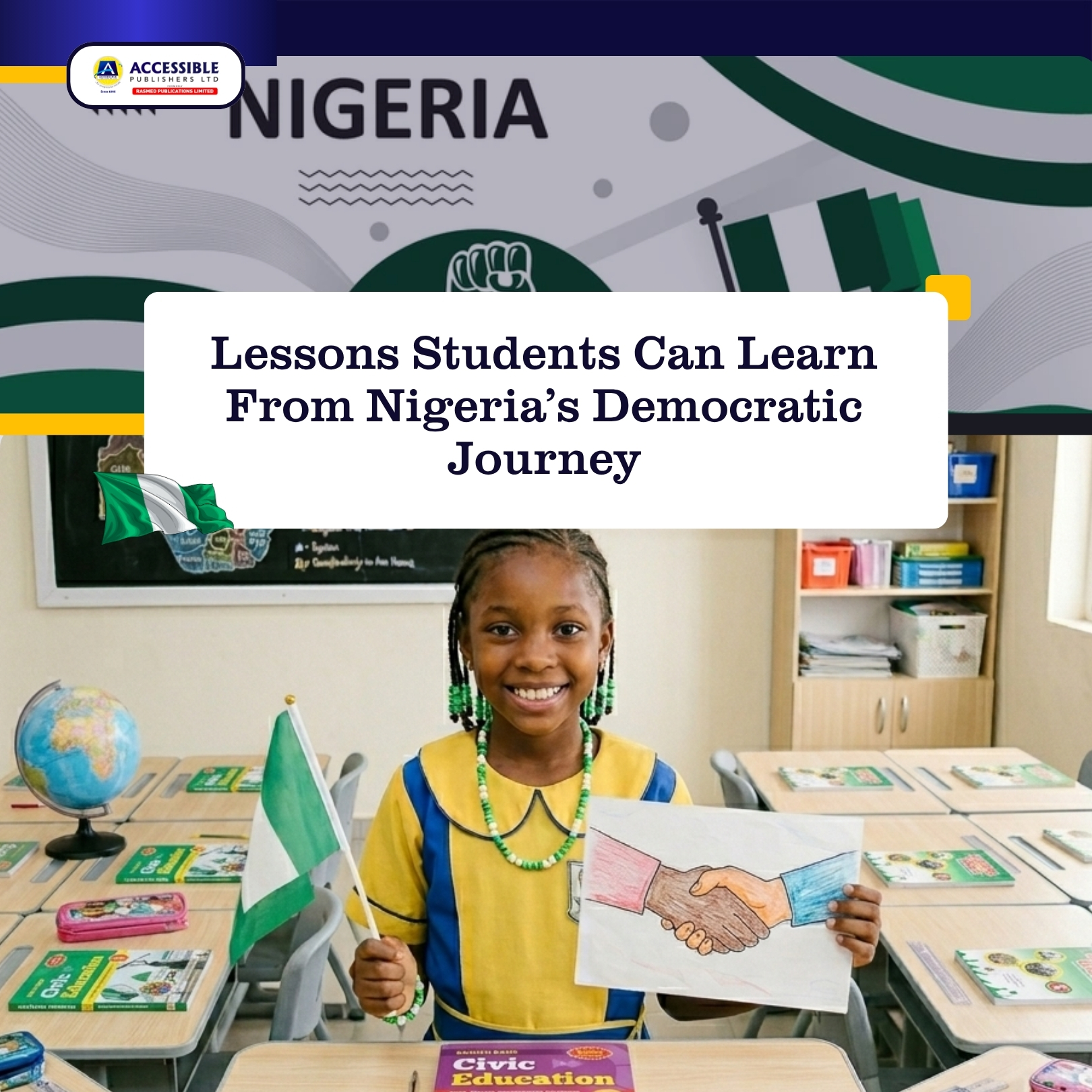
Every year, Nigeria celebrates Democracy Day, a reminder of the nation’s journey toward democratic governance and the sacrifices made by citizens, leaders, and activists who fought for the right to choose their leaders freely. While democracy may seem like a topic reserved for politicians and government officials, it carries valuable lessons for students as well.
Nigeria’s democratic journey is a story of resilience, growth, challenges, and progress. It teaches important values such as responsibility, unity, participation, and the power of education. As the future leaders of the nation, students can draw inspiration from this journey and learn principles that will help them become active, responsible, and informed citizens.
As former South African President Nelson Mandela once said, “Education is the most powerful weapon which you can use to change the world.” This statement perfectly highlights the connection between education and democracy.
In this article, we will explore the important lessons students can learn from Nigeria’s democratic journey and why these lessons remain relevant today.
Understanding Nigeria’s Democratic Journey and Its Importance
Nigeria gained independence from Britain in 1960 and has experienced different forms of government, including military rule and democratic governance. The country’s democratic journey has not always been smooth, but it has demonstrated the determination of Nigerians to build a nation where citizens have a voice in governance.
The return to democratic rule in 1999 marked a significant turning point in Nigeria’s history. Since then, Nigerians have participated in elections, enjoyed greater freedom of expression, and witnessed continuous efforts to strengthen democratic institutions.
For students, understanding Nigeria’s democratic journey is important because it helps them appreciate the rights and freedoms they enjoy today. It also teaches that progress often requires patience, sacrifice, and active participation from citizens.
Learning about democracy enables students to understand how governments function, how decisions are made, and why civic responsibility matters. More importantly, it helps them develop a sense of belonging and responsibility toward their country.
Lessons on Unity, Diversity, and National Development
One of the greatest lessons students can learn from Nigeria’s democratic journey is the importance of unity in diversity.
Nigeria is home to hundreds of ethnic groups, languages, and cultures. Despite these differences, democracy encourages citizens to work together toward common national goals. The nation’s progress depends on cooperation, mutual respect, and peaceful coexistence among its people.
Students can apply this lesson in their schools and communities by respecting people from different backgrounds, religions, and cultures. Learning to embrace diversity helps build stronger relationships and prepares young people for leadership in a multicultural society.
Nigeria’s democratic experience also highlights the role of collective effort in national development. No nation can grow when citizens are divided by prejudice or discrimination. Development happens when people contribute their talents, ideas, and skills for the common good.
The lesson here is simple: every student, regardless of background, has something valuable to contribute to society.
Why Young People Should Participate in Nigeria’s Democratic Journey
Democracy thrives when citizens actively participate in shaping their communities and nation. Young people, especially students, have an important role to play in this process.
Nation-building does not begin only after graduation or when someone enters politics. It starts with everyday actions such as obeying rules, demonstrating integrity, volunteering, participating in community projects, and staying informed about national issues.
Nigeria’s democratic journey shows that change is often driven by individuals who choose to get involved rather than remain silent. Throughout the country’s history, many young people have contributed to social change, advocacy, innovation, and community development.
Students can contribute to nation-building by:
- Developing strong leadership skills.
- Participating in school clubs and civic activities.
- Promoting peace and tolerance.
- Using their talents to solve problems in their communities.
- Staying informed about national developments.
As American statesman John Quincy Adams wisely noted, “If your actions inspire others to dream more, learn more, do more and become more, you are a leader.”
By becoming responsible and engaged citizens, students can help create a better future for Nigeria.
The Role of Education in Strengthening Democracy
Education remains one of the strongest pillars of a successful democracy. An educated population is better equipped to make informed decisions, understand civic responsibilities, and contribute meaningfully to society.
Nigeria’s democratic progress has highlighted the need for citizens who can think critically, evaluate information, and participate responsibly in public discussions. This is where education becomes essential.
Schools play a significant role in teaching democratic values such as fairness, accountability, respect for others, and responsible leadership. Through classroom learning, debates, group projects, and civic education, students gain skills that prepare them for active citizenship.
Education also empowers students to understand their rights while recognising the importance of respecting the rights of others. It encourages informed participation rather than blind acceptance of information or opinions.
Furthermore, literacy and access to quality educational resources help students develop the confidence and knowledge needed to contribute positively to democratic processes and national development.
When students embrace learning, they are not only preparing for academic success but also equipping themselves to become informed citizens and future leaders.
Conclusion
Nigeria’s democratic journey offers valuable lessons that extend far beyond politics. It teaches students the importance of resilience, unity, participation, responsibility, and education. These lessons are essential for building strong communities and a prosperous nation.
As future leaders, students have the opportunity to learn from Nigeria’s past while contributing to its future. By embracing democratic values, respecting diversity, participating in community development, and pursuing quality education, they can play an active role in shaping a stronger and more united Nigeria.
The future of democracy depends not only on governments and institutions but also on informed, responsible, and engaged young people. Every student has the potential to become a positive force for change, helping to build the Nigeria they wish to see.
Check out our literature catalogue to discover an array of titles that can help motivate children to keep turning the pages. It’s time to explore and embark on an enriching literary journey.
Click this link to learn more about us here!