
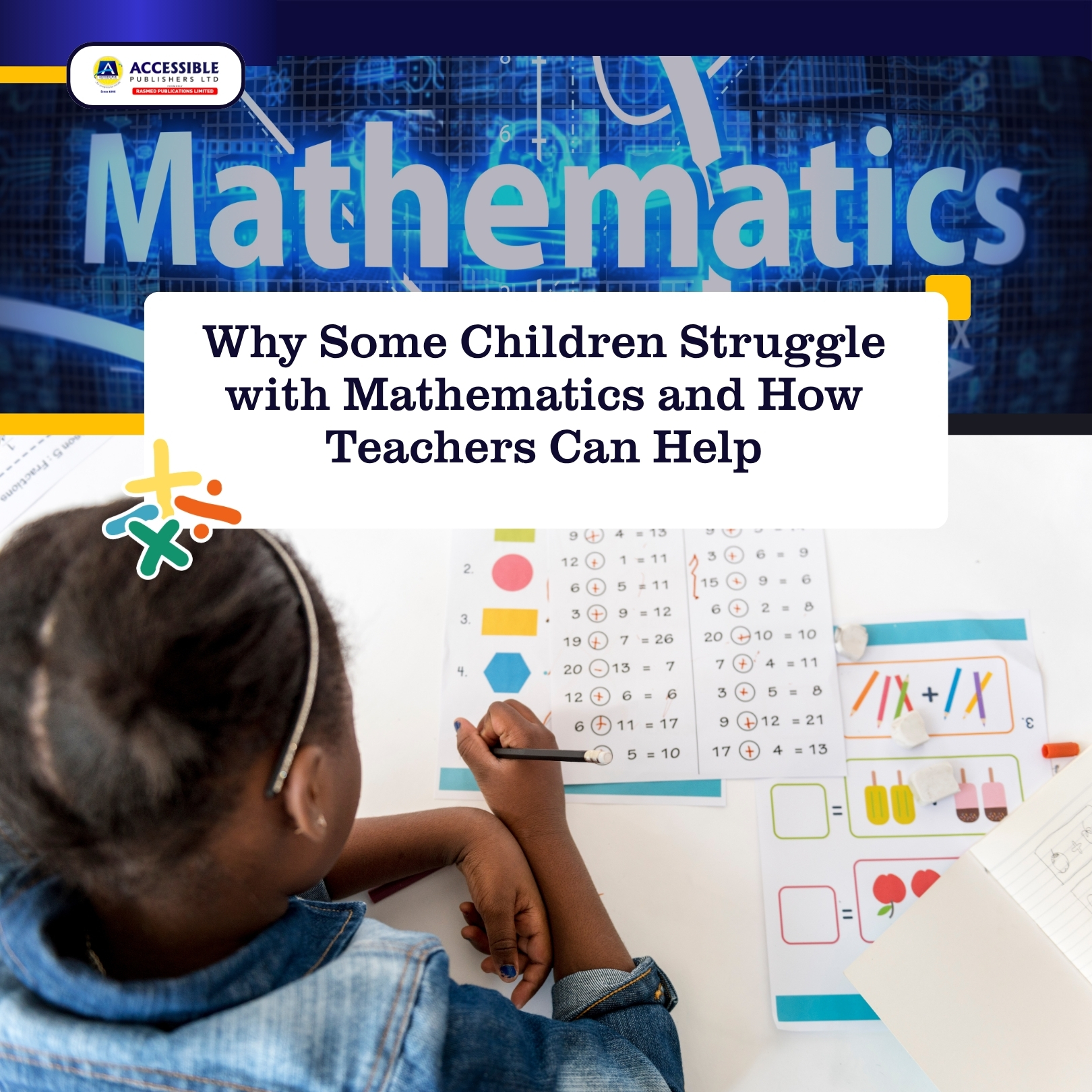
For many children, Maths is more than just another school subject—it is often the subject they fear the most. While some learners eagerly solve mathematical problems, others become anxious the moment they see numbers, equations, or word problems. This fear can gradually develop into frustration, low self-esteem, and poor academic performance if not properly addressed.
The truth is that struggling with mathematics does not necessarily mean a child is unintelligent. In many cases, the challenge stems from learning experiences, teaching methods, confidence issues, or misconceptions built over time. As the famous mathematician and educator Jo Boaler once noted, “Anyone can learn mathematics to high levels.” The key lies in creating the right learning environment and providing the right support.
Understanding why some children find mathematics difficult is the first step toward helping them overcome their fears and develop a positive relationship with the subject. In this article, we will explore the reasons behind children’s struggles with mathematics and practical ways teachers can make learning maths easier, more engaging, and enjoyable.
Understanding Why Many Children Develop Fear of Maths
Mathematics anxiety is a real challenge faced by many learners. It refers to feelings of tension, worry, or fear that interfere with a child’s ability to solve mathematical problems.
Several factors contribute to this fear:
Early Negative Exposure
Children who encounter difficulties with basic mathematical concepts at an early stage may begin to view maths as a difficult subject. Without timely intervention, these struggles can grow and become deeply rooted.
Pressure to Get the Right Answer
Unlike some subjects where multiple perspectives may be accepted, mathematics often focuses on arriving at a correct solution. This can create pressure for children who fear making mistakes.
Comparisons with Peers
When students are constantly compared to classmates who perform better in mathematics, they may begin to believe they are incapable of succeeding in the subject.
Influence from Adults
Sometimes parents, siblings, or even teachers unintentionally pass on negative attitudes by saying things like, “Maths was never my strength.” Children often absorb these beliefs and begin to view mathematics as something naturally difficult.
As a result, many learners approach mathematics with fear rather than curiosity, making the learning process even more challenging.
How Negative Learning Experiences Affect Confidence in Maths
A child’s confidence plays a significant role in academic success, especially in mathematics.
When learners repeatedly experience failure or embarrassment in maths classes, their confidence begins to decline. Over time, they may convince themselves that they are simply “not good at maths.”
Some common negative experiences include:
Public Correction and Criticism
Students who are frequently corrected harshly in front of their classmates may become reluctant to participate in lessons. Instead of trying to solve problems, they may choose silence to avoid embarrassment.
Rushing Through Concepts
Children learn at different paces. When mathematical concepts are taught too quickly, some learners are left behind. As lessons become more advanced, these gaps in understanding widen.
Excessive Focus on Memorisation
Many students are taught to memorise formulas without fully understanding how or why they work. This often leads to confusion when they encounter unfamiliar problems.
Repeated Failure
Consistently poor test scores can create a cycle of discouragement. Students may stop putting effort into mathematics because they expect failure regardless of how hard they try.
As Henry Ford famously said, “Whether you think you can, or you think you can’t—you’re right.” When students lose confidence in their mathematical abilities, their performance often reflects that belief.
Common Mistakes That Make Maths Harder for Students
Sometimes, the difficulty students experience in mathematics is not solely because of the subject itself but because of certain teaching and learning practices.
Teaching Without Real-Life Connections
Students often struggle when they cannot see how mathematics relates to their everyday lives. Concepts become easier to understand when linked to familiar situations such as shopping, cooking, sports, or budgeting.
Ignoring Foundational Gaps
Mathematics builds upon previous knowledge. A child who struggles with basic addition, subtraction, multiplication, or fractions will likely face greater difficulties with advanced topics.
Overreliance on Traditional Teaching Methods
Lessons that focus only on lectures and note-taking may not meet the needs of diverse learners. Some children learn better through visual aids, practical demonstrations, games, and group activities.
Focusing Only on Correct Answers
When teachers prioritise correct answers over problem-solving processes, students may become afraid of experimenting with different approaches.
Limited Opportunities for Practice
Mathematics requires consistent practice. Insufficient opportunities to apply concepts can hinder mastery and retention.
Recognising these common mistakes can help educators create more effective and inclusive learning experiences.
Practical Teaching Strategies That Can Make Maths Easier and More Fun
Fortunately, mathematics does not have to be intimidating. Teachers can adopt various strategies to make learning more engaging and enjoyable for students.
Create a Positive Learning Environment
Encourage students to see mistakes as part of the learning process. Celebrate effort, persistence, and improvement rather than focusing solely on correct answers.
Use Real-Life Examples
Connect mathematical concepts to everyday situations. For example, fractions can be taught using pizza slices, while percentages can be explained through shopping discounts.
Incorporate Educational Games
Mathematics games, puzzles, and competitions can transform lessons from stressful experiences into exciting challenges.
Use Visual and Hands-On Learning Materials
Manipulatives, charts, number lines, counters, and interactive tools help students visualise abstract concepts more effectively.
Differentiate Instruction
Recognise that students learn differently. Provide multiple teaching approaches and varying levels of support to accommodate diverse learning needs.
Encourage Collaborative Learning
Group activities and peer discussions allow students to learn from one another and develop confidence in problem-solving.
Break Complex Topics into Smaller Steps
Large mathematical concepts become more manageable when divided into smaller, achievable learning objectives.
Provide Regular Encouragement
Simple words of encouragement can significantly impact a student’s confidence. Recognising progress, no matter how small, motivates learners to keep trying.
Integrate Technology
Educational apps, videos, and interactive learning platforms can make mathematical concepts more engaging and easier to understand.
Strengthen Foundational Skills
Before introducing advanced topics, ensure students have mastered the necessary foundational concepts. Strong basics provide a solid platform for future success.
Conclusion
Mathematics is often viewed as one of the most challenging subjects in school, but the struggle many children experience is rarely due to a lack of intelligence. More often, it stems from fear, negative learning experiences, low confidence, teaching gaps, or ineffective instructional approaches.
Teachers play a crucial role in shaping students’ attitudes toward mathematics. By creating supportive classrooms, using engaging teaching methods, encouraging mistakes as learning opportunities, and connecting maths to real-life situations, educators can help learners build confidence and develop a genuine appreciation for the subject.
When children begin to see mathematics not as an obstacle but as a skill they can master, they become more willing to participate, practise, and succeed. With patience, creativity, and the right teaching strategies, every child can be given the opportunity to thrive in mathematics.
Check out our literature catalogue to discover an array of titles that can help motivate children to keep turning the pages. It’s time to explore and embark on an enriching literary journey.
Click this link to learn more about us here!