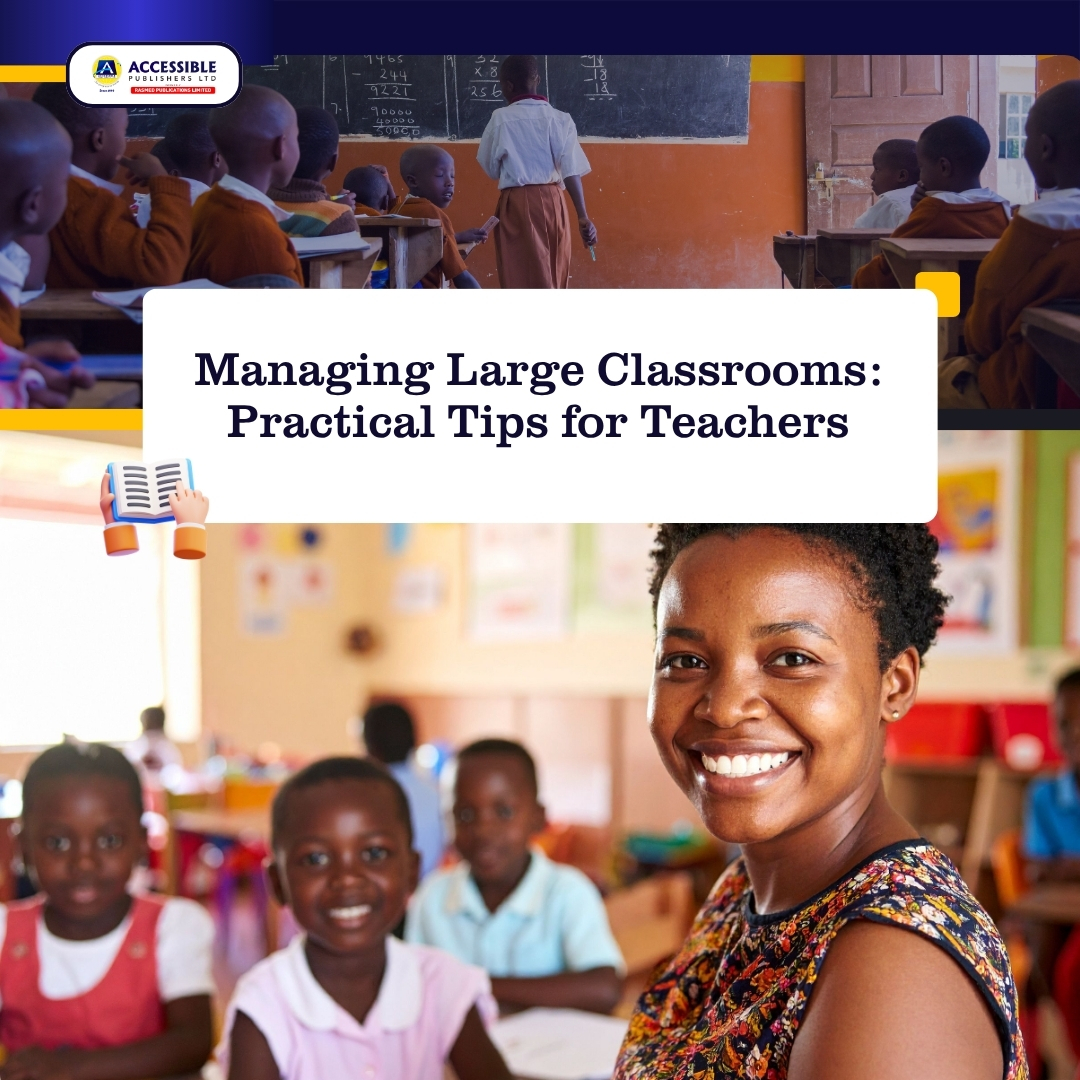
Walking into a classroom filled with fifty, sixty, or even more eager learners can feel like stepping into controlled chaos. Voices overlap, attention is scattered, and the teacher’s energy is stretched in multiple directions at once. Yet, within that seeming disorder lies a powerful opportunity: a large classroom is not a problem to be feared, but a dynamic learning community waiting to be structured.
As the famous educator William Arthur Ward once said, “The mediocre teacher tells. The good teacher explains. The superior teacher demonstrates. The great teacher inspires.” Managing a large classroom effectively is not about reducing the number of students—it is about increasing the impact of the teacher.
This blog explores practical, realistic strategies teachers can use to manage large classrooms while maintaining order, engagement, and meaningful learning.
Understanding the Challenges of Large Classroom Settings
Before solutions, there must be understanding. Large classrooms come with unique challenges, such as:
- Difficulty in giving individual attention to students
- Increased noise levels and distractions
- Varying learning abilities in one space
- Classroom control is becoming more demanding
- Slower feedback and assessment processes
However, it is important to recognise that these challenges are not signs of failure. Instead, they reflect diversity and scale. Every classroom size requires adaptation, and large classrooms simply demand stronger structure and intentional planning.
How to Maintain Discipline Without Being Overly Strict
Discipline in a large classroom does not mean fear or harshness. In fact, excessive strictness can reduce student participation and trust.
Instead, effective classroom discipline should be:
- Consistent: Rules must be applied fairly to everyone
- Predictable: Students should know the consequences of their actions
- Respect-based: Teachers should correct behaviour without humiliation
A useful principle to follow is: firm but fair. When students respect the system, they are more likely to follow it.
Another helpful approach is positive reinforcement—rewarding good behaviour rather than focusing only on misconduct. A simple acknowledgment, like praise or small privileges, can significantly improve classroom behaviour.
Engaging All Students in a Crowded Classroom Environment
One of the biggest struggles in large classrooms is ensuring no student is left behind mentally.
Here are practical engagement strategies:
- Use group work: Divide students into small, manageable groups
- Ask directed questions: Instead of asking the whole class, target groups or individuals
- Incorporate movement: Let students rotate tasks or participate in short activities
- Use think-pair-share: Students think individually, discuss in pairs, then share with the class
Remember, engagement is not noise—it is purposeful participation. A well-managed noisy classroom is often more effective than a silent but passive one.
As Benjamin Franklin once implied, “Tell me and I forget. Teach me, and I remember. Involve me, and I learn.”
Classroom Rules and Routines That Improve Order and Focus
In large classrooms, structure is everything. Without clear routines, chaos becomes inevitable.
Effective classroom rules should be:
- Simple and easy to remember
- Displayed visibly in the classroom
- Consistently reinforced
Examples include:
- Enter quietly and begin warm-up tasks immediately
- Raise your hand before speaking
- Respect speaking turns
- Keep learning materials ready before class begins
Routines also save time. For example:
- A fixed “starter activity” at the beginning of every lesson
- A standard procedure for submitting assignments
- A clear signal for gaining attention (like hand claps or a bell cue)
When routines become habits, the teacher spends less time controlling behaviour and more time teaching.
Tools and Teaching Aids That Support Large Class Management
Technology and simple teaching aids can make a huge difference in large classrooms.
Some useful tools include:
- Flashcards and charts: For quick explanations and visual learning
- Projectors or screens (if available): To reach all students at once
- Whiteboards or mini-boards: For group responses
- Timers: To manage activities efficiently
- Mobile learning apps or audio tools: For reinforcement outside the classroom
Even low-tech solutions like colored cards for responses (green for yes, red for no) can increase participation and reduce confusion.
The goal is not complexity, but clarity and efficiency.
Conclusion
Managing a large classroom is less about controlling numbers and more about mastering structure, engagement, and consistency. When teachers understand the dynamics of their environment, set clear routines, and use effective engagement strategies, even the largest classroom can become a place of meaningful learning.
Ultimately, great teaching is not measured by how quiet a classroom is, but by how many minds are actively engaged and growing.
Large classrooms are not barriers—they are opportunities to inspire more learners at once.
Check out our literature catalogue to discover an array of titles that can help motivate children to keep turning the pages. It’s time to explore and embark on an enriching literary journey.
Click this link to learn more about us here!