
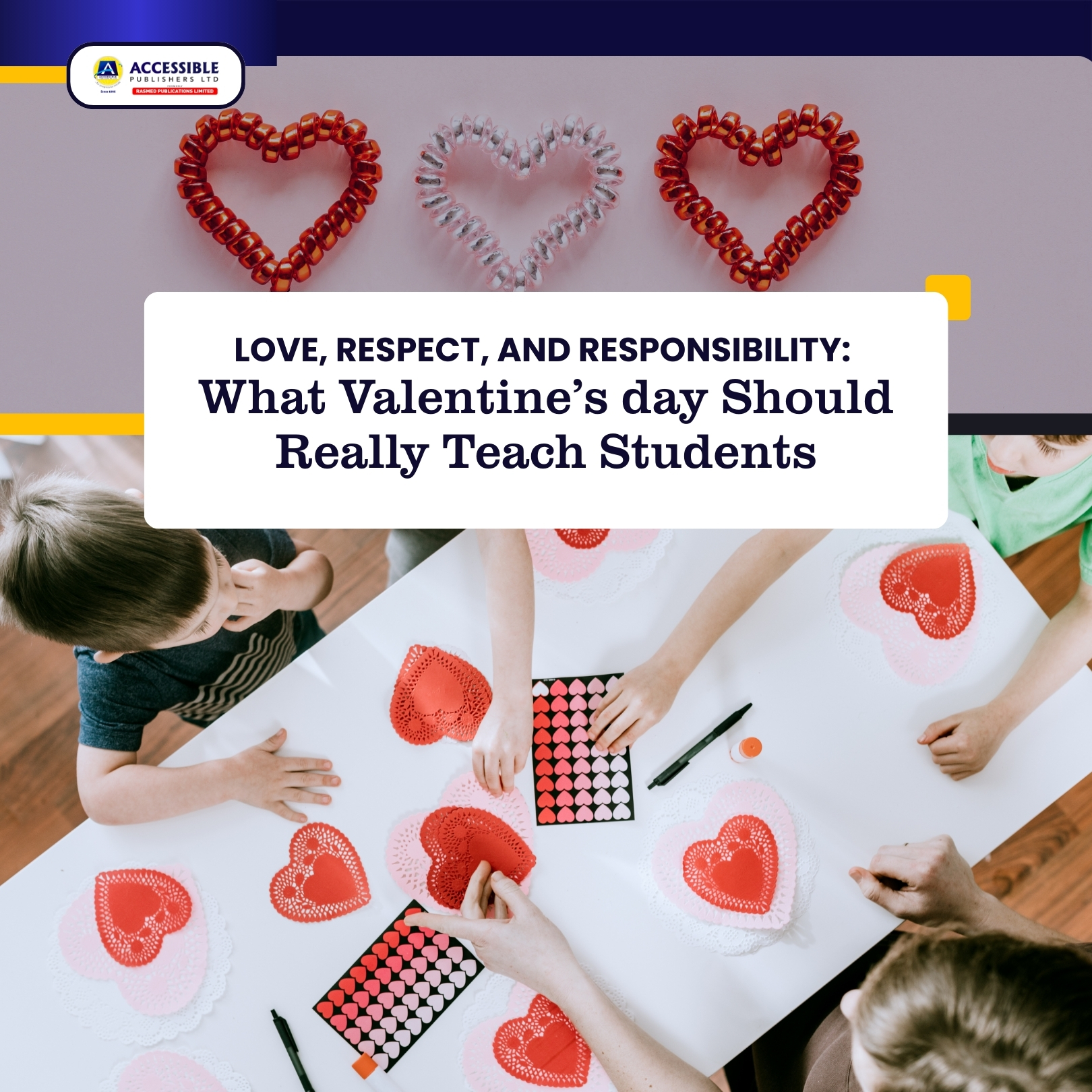
Every February, schools and communities mark Valentine’s Day in various ways. Beyond its social and cultural expressions, the day presents an opportunity for reflection within educational spaces. Rather than focusing on outward symbols or seasonal excitement, schools can use this moment to examine the deeper values that sustain healthy learning environments. In an educational context, love should be understood as a principle, for schools are spaces where character is formed, values are refined, and futures are shaped. When approached thoughtfully, Valentine’s Day can serve as a teaching moment, one that reframes love as responsibility, respect, discipline, and moral courage.
This blog redefines love within the school environment, identifies five essential love-centred qualities learners should cultivate, and explores how teachers and parents can make love come alive in the learning process.
Rethinking ‘Valentine’s Day’ in the School Context
In schools, Valentine’s Day is not primarily romantic; it is relational and ethical. It is the decision to treat others with dignity. It is patience in group work, honesty in examinations, empathy in disagreement, and restraint in moments of anger. When understood this way, love becomes a stabilising force in academic communities.
Young people are constantly forming their understanding of relationships. If schools remain silent, popular culture will fill the gap, often equating love with obsession, material display, or emotional dependency. Education must offer a wiser alternative. Love, properly understood, is not possession; it is responsibility. It does not pressure; it protects. It does not distract from purpose; it strengthens it.
By redefining love in this way, we shift Valentine’s Day from spectacle to substance.
Five Love-Centred Qualities Learners Should Imbibe
Love, when rightly understood, must be translated into habits that shape daily conduct. It is not enough to speak of values; learners must embody them in their interactions and decisions. The following five stand out as essential foundations for character and community.
- Respect
Respect is the foundation of every meaningful relationship. Students demonstrate love when they honour boundaries, listen actively, and reject bullying or mockery. Respect affirms the worth of others without demanding agreement.
2. Self-Discipline
Love without discipline quickly becomes chaos. Learners show mature love when they prioritise their studies, manage their emotions, and resist peer pressure. Self-control protects both personal ambition and healthy relationships.
3. Empathy
Empathy allows students to see beyond themselves. It cultivates patience in conflict and compassion towards classmates facing challenges. In diverse school environments, empathy is not optional; it is essential.
4. Responsibility
Love requires accountability. Responsible learners understand that their choices affect others. They communicate honestly, avoid manipulation, and take ownership of mistakes. Responsibility transforms affection into integrity.
5. Integrity
True love aligns words and actions. Integrity means refusing to cheat, gossip, or exploit trust. It builds reputations that last longer than fleeting admiration. Together, these qualities move love from emotion to character.
How Teachers and Parents Can Make Love Come Alive in Learning
Values are not absorbed through slogans; they are modelled through conduct. Teachers demonstrate love when they prepare thoroughly, correct fairly, and remain patient with struggling learners. Firm discipline, when applied with consistency and care, is itself an expression of love.
Beyond the classroom, parents play an equally decisive role. Parents reinforce this foundation by discussing relationships openly at home. Instead of dismissing Valentine’s Day, they can use it as an opportunity to teach discernment, what healthy affection looks like, how to respect boundaries, and why education must remain a priority.
At the institutional level, schools might also organise conversations, debates, or assemblies focused on respect, consent, and emotional intelligence. When institutions guide the narrative, students gain clarity rather than confusion. Ultimately, love becomes tangible when adults embody it.
Conclusion
Valentine’s Day will always carry its celebratory charm. Yet within educational spaces, it should serve a deeper purpose. It should remind students that love is not merely something to feel, but something to practise through respect, discipline, empathy, responsibility, and integrity.
When schools reclaim this narrative, they protect young minds from distortion and equip them with values that outlast adolescence. Love, in its truest sense, becomes not a distraction from learning but the moral framework that sustains it. If we teach students this lesson well, Valentine’s Day will no longer be a moment of impulse; it will become a yearly reminder of who they are becoming.
Check out our literature catalogue to discover an array of titles that can help motivate children to keep turning the pages. It’s time to explore and embark on an enriching literary journey.
Click this link to learn more about us here!