
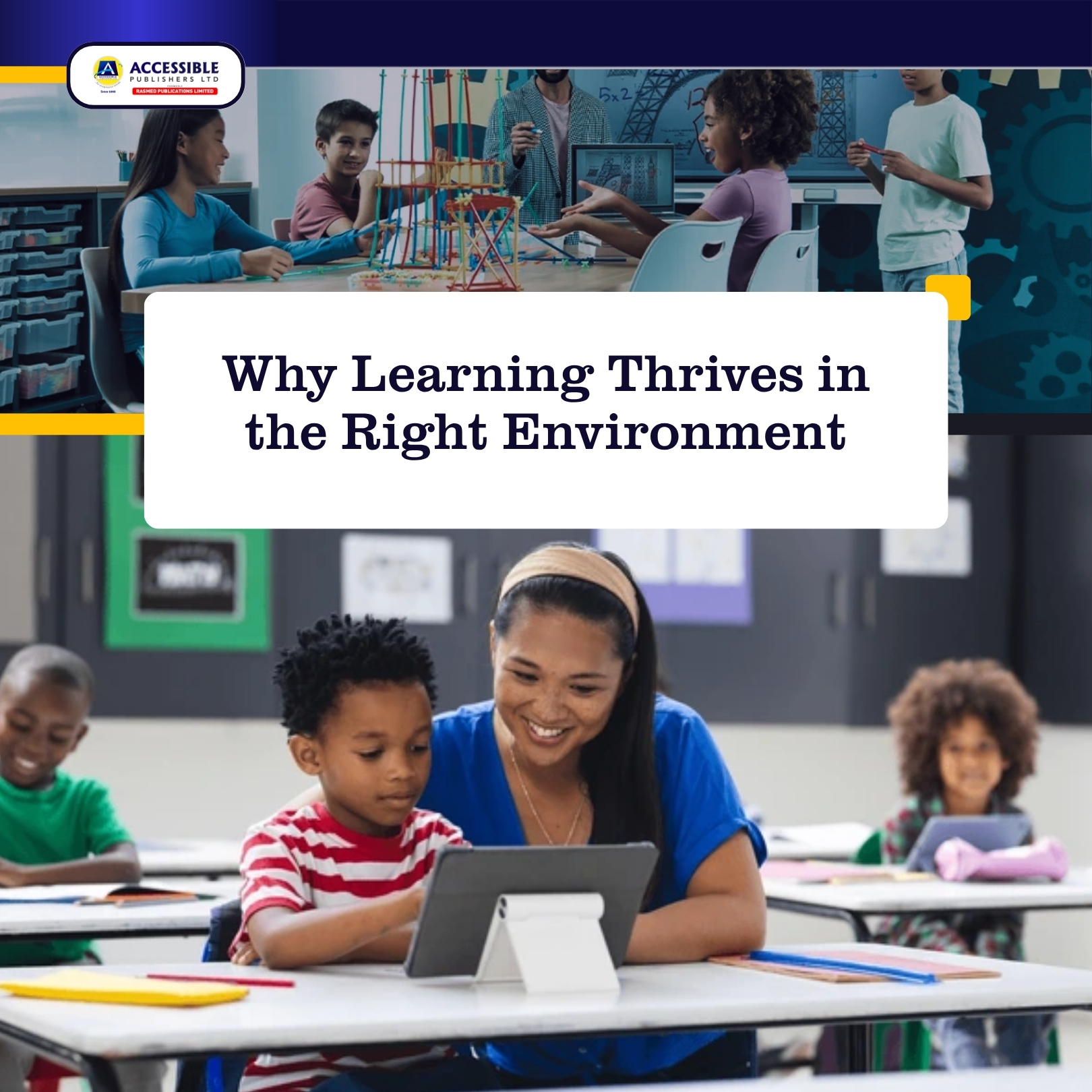
The school environment where teaching and learning take place is a critical factor in achieving the aims and objectives of any school system.
This environment is indispensable and sets the tone for everything that follows. It boosts productivity, nurtures excellence, and creates a space where students feel comfortable, safe, and supported.
Teachers are also an essential part of this.
Building on this foundation, this piece explores the elements that comprise a learning environment, the physical factors that influence learning, and how technology has become an integral part of it.
Defining a Conducive Learning Environment
The learning environment is a broad concept. In simple terms, it comprises the psychological, social, cultural and physical setting in which learning occurs and has an influence on student motivation and success.
It goes beyond the physical layout of the school to include other key dimensions such as social interaction, leadership quality, ethics, and the availability of competent personnel and adequate resources. Respect, good communication, and active parental involvement are equally crucial.
Together, these factors determine what a truly conducive learning environment is for both students and educators.
Physical Factors That Shape Learning
Beyond these broader elements, the physical features of the learning space often play a decisive role in learning outcomes. Some of these factors touch on:
a. Noise-free Atmosphere
This reduces distractions and improves focus in a school environment.
b. Clean Indoor Air and Water
Good ventilation and access to safe drinking water promote health and alertness.
c. Presence of Trees and Greenery
Provide a calm, natural atmosphere that promotes learning.
d. Effective Waste Disposal and Management
Reduces health risks and makes the environment habitable.
e. Well-maintained Restrooms
This ensures comfort for students and staff.
How Technology Can Enhance the Learning Space
Technology pairs with other elements as a vital part of modern learning, bringing speed, access, and connectivity. It defines classroom experiences in ways unseen, to include:
a. Easy Access to Resources
Students and teachers can access a wide variety of online books, videos, and digital libraries anytime.
b. Personalised Learning
Technology allows teachers to adapt lessons to meet the needs of each student.
c. Real-time Feedback
Technology provides instant and constructive feedback to students on their performance, quizzes, and assignments. Immediate feedback helps students identify areas of improvement and promotes self-directed learning.
d. Enhanced Teacher Productivity
Teachers can devote more of their attention to lesson planning and execution when educational technology is in use. This facilitates workspace efficiency.
e. Global Connectivity
Through educational technology, students can connect and collaborate with peers and experts around the world. This exposure broadens perspectives and makes learning more collaborative.
Conclusion
Learning cannot flourish in spaces that are neglected or uninspiring. The right curriculum alone cannot guarantee success. The environment, in all its dimensions, shapes outcomes just as much and ultimately drives excellence. The call is a simple one: now is the time to prioritise creating environments where every student can thrive and reach their full potential.
Check out our literature catalogue to discover an array of titles that can help motivate children to keep turning the pages. It’s time to explore and embark on an enriching literary journey.
Click this link to learn about us here!