
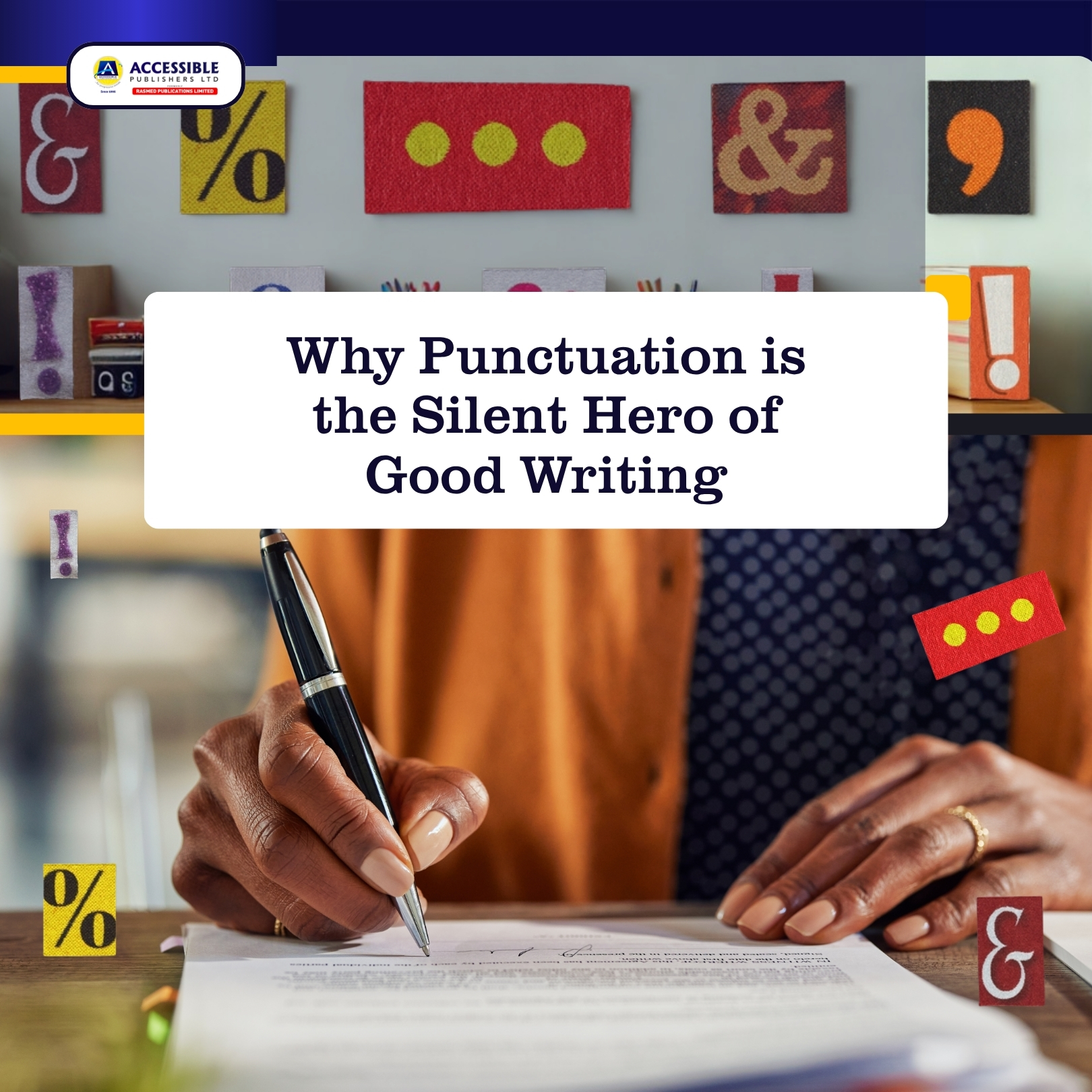
Punctuation is a critical aspect of linguistic competence. Readers may glide past it, unaware of its presence, until its absence throws meaning into confusion. The absence or misuse of punctuation can distort meaning, obscure intent, and disrupt the logical flow of ideas. Far from being mere rules on a page, punctuation acts as the silent hero of writing, giving structure to thoughts and clarity to expression.
This guide reveals how punctuation, the silent hero of writing, shapes clarity and meaning, explains the function of common marks, and presents five steps students can take to master its use.
The Role of Punctuation in Writing
Punctuation performs a central function in written communication. It regulates the flow of ideas and mirrors the natural rhythm of speech within the constraints of text. For instance, the difference between “Let’s eat, Grandma” and “Let’s eat Grandma” demonstrates how a simple comma can entirely alter meaning. Without punctuation, even complex arguments with sophisticated vocabulary can appear disordered and ambiguous. The precision it introduces allows writing to move beyond mere word arrangement into coherent, interpretable discourse.
Beyond the technical role of separating clauses and sentences, punctuation contributes significantly to meaning-making. It signals tone, emphasis, and logical relationships between ideas.
Punctuation also enhances readability and persuasive power. In academic or analytical writing, correct punctuation maintains logical sequence and prevents misinterpretation. A misplaced colon or missing comma can weaken the argument, as seen in the difference between “He provided evidence: examples, data, and charts” and “He provided evidence, examples, data, and charts.” The first is clear and structured; the second is confusing. Correct punctuation ensures that readers focus on content rather than grappling with structure, allowing the writer’s reasoning to remain transparent and credible
Common Punctuation Marks and Their Impact
- The Comma (,):
The comma regulates the flow of sentences by separating ideas, clauses, or items in a list. It prevents ambiguity and helps maintain clarity. For example, in the sentence, “After reviewing the notes, the student submitted the assignment,” the comma clarifies that the reviewing occurs before submission. Without it, the sentence could confuse readers about the sequence of actions. Commas also manage pauses in complex sentences, making writing smoother and more readable.
- The Period (.):
The period signals the end of a thought, providing closure and finality. It helps structure writing into manageable, digestible segments. For instance: “The student completed the project. She then presented it to the class.”
- The Semicolon (;):
The semicolon links closely related ideas without creating separate sentences. It often conveys a relationship of cause, sequence, or comparison. Consider: “I reviewed the lecture notes; I also updated my study plan.” This mark is particularly useful in analytical writing.
- The Colon (:):
The colon introduces explanations, lists, or elaborations, signalling that what follows is directly related to the preceding clause. For example: “The student prepared three items for the presentation: slides, handouts, and a poster.”
- The Dash (—) and En Dash (–):
The dash serves multiple purposes in writing, but it is important to differentiate between the em dash (—) and the en dash (–). The em dash is versatile: it can indicate a break in thought, introduce additional information, or emphasise a point. For example: “The student finally completed the assignment—after weeks of research and revisions.”
The en dash primarily shows ranges or connections between elements, often used for numbers, dates, or related concepts. For example: “The workshop will run from 10:00 a.m. to 12:30 p.m.” or “The student–teacher collaboration was successful.” The en dash signals continuity or relationship rather than interruption, distinguishing it from the em dash.
- The Question Mark (?) and Exclamation Mark (!):
The question mark indicates inquiry or prompts reflection, while the exclamation mark conveys emphasis or emotion. For instance: “Did the student submit the report on time?” invites consideration, whereas “The student nailed the presentation!” communicates excitement or approval. Both marks guide interpretation and tone in writing.
5 Steps Students Can Take to Improve Their Punctuation Usage
- Read Actively and Observe Punctuation
One way students can improve their punctuation is by observing how it is used in textbooks, articles, and academic journals. Noticing how commas, semicolons, and dashes structure sentences helps internalise correct usage.
- Practice Writing Regularly
Frequent writing exercises, such as essays, reports, or journals, provide opportunities to apply punctuation rules in context. Reviewing and revising sentences with a focus on punctuation helps reinforce learning.
- Use Punctuation Guides and Resources
Consulting style guides, grammar books, or online resources can clarify rules for complex punctuation marks. Resources like Purdue OWL https://owl.purdue.edu/ or style manuals for APA/MLA formats are particularly helpful for academic writing.
- Proofread and Edit Carefully
After writing, students should review their work specifically for punctuation. Reading aloud can reveal misplaced or missing marks, while editing ensures clarity, flow, and logical structure.
- Seek Feedback and Learn from Mistakes
Sharing writing with peers, instructors, or tutors allows students to receive targeted feedback on punctuation usage. Reflecting on corrections and practicing them in subsequent work strengthens proficiency over time.
Interestingly, punctuation can be mastered by all and sundry, and when applied consistently, this silent hero of writing transforms academic work into clear, precise, and professional communication.
Check out our literature catalogue to discover an array of titles that can help motivate children to keep turning the pages. It’s time to explore and embark on an enriching literary journey.
Click this link to learn more about us here!