
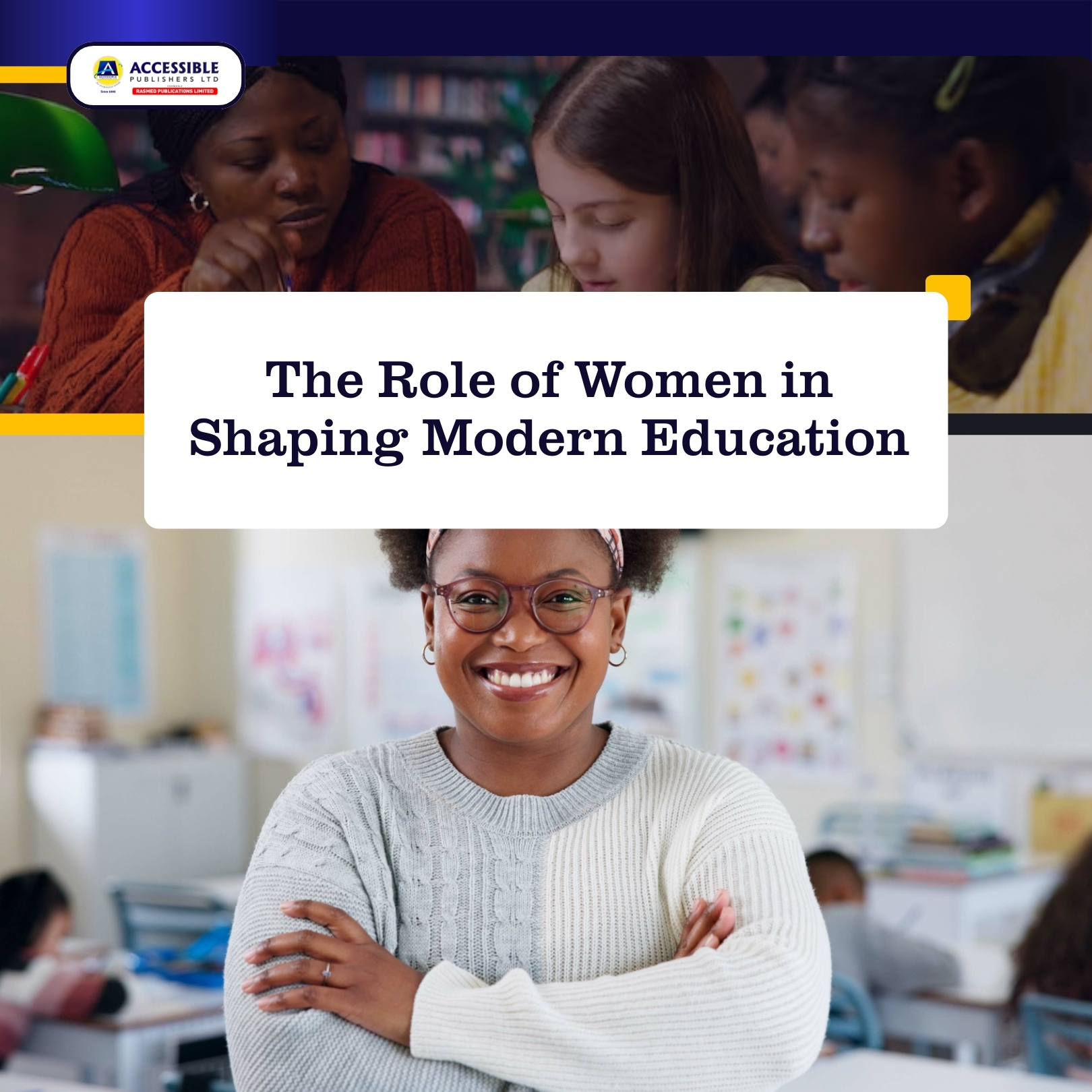
Education has long been recognised as one of the most powerful instruments for social transformation. However, it is important to note that behind classrooms and school corridors stands a force that has quietly but profoundly shaped modern education: women. From the earliest days of organised schooling to the twenty-first-century learning, women have played central roles as teachers, mentors, administrators, and advocates of knowledge. This blog, thus, examines the power of the female teacher, explores the 2026 theme of International Women’s Day, and outlines five indispensable roles of women in education.
The Power of a Female Teacher
Few figures in academia are as impactful as the female teacher. For many students, particularly in early childhood education, female teachers are often the first professional mentors they encounter outside the home. Their presence frequently blends intellectual guidance with emotional support.
In practical terms, this influence often appears in small but powerful classroom moments. A female teacher may encourage a hesitant student with words such as, “Your answer might not be perfect, but your voice matters in this classroom.” Such reassurance can transform fear into confidence. Another might remind her pupils that “mistakes are simply steps on the path to understanding,” helping students see learning as a process rather than a test of worth.
Research across various educational systems also points out that female teachers often nurture collaborative learning, empathy, and patience in the classroom. Instead of competition alone, they frequently emphasise cooperation and collective progress.
For many girls, the presence of a female teacher carries an additional layer of inspiration. Seeing a woman confidently leading a classroom can quietly reshape a young girl’s sense of possibility. A teacher who tells her class, “Your dreams are not limited by where you come from,” may be planting seeds that extend far beyond the school walls. In this way, female teachers become living examples of intellectual leadership and professional achievement.
Taken together, these everyday actions reveal the quiet but transformative power of female teachers. Their influence is rarely confined to lesson plans or textbooks; it unfolds in encouragement, mentorship, and community connection.
Decoding the 2026 Theme for International Women’s Day
Each year, International Women’s Day (IWD) provides an opportunity for the global community to pause and reflect on the progress made toward gender equality while acknowledging the work that still lies ahead. Celebrated across continents through debates, rallies, campaigns, and public conversations, the day has evolved into one of the most visible global platforms for recognising the achievements and potential of women and girls. However, beyond the celebrations, IWD also carries a deeper purpose. It serves as a reminder that the pursuit of gender equality remains unfinished.
The 2026 theme, Give To Gain, reflects precisely this spirit of purposeful engagement. At its core, the campaign encourages a culture of generosity and collaboration. Rather than viewing support for women’s advancement as a one-sided effort, the theme emphasises reciprocity: when individuals, institutions, and communities invest in women, society as a whole benefits. In this sense, giving is not a subtraction of resources but an intentional multiplication of opportunity.
This philosophy can manifest in many forms. It may involve financial contributions, but it extends far beyond donations. Knowledge sharing, mentorship, advocacy, training, visibility, and institutional support all represent powerful ways of “giving” toward women’s empowerment. For example, when organisations open doors for women’s leadership, when educators mentor young girls, or when communities challenge discriminatory norms, they collectively build a more supportive and interconnected world.
Importantly, the theme also invites personal reflection. Ultimately, the message of Give To Gain is clear: when women thrive, everyone benefits. By investing our time, knowledge, and resources into advancing women and girls, societies cultivate stronger institutions, richer intellectual environments, and more inclusive communities. And nowhere is this principle more evident than in education, where the empowerment of women continues to shape classrooms, careers, and the future itself.
Five Indispensable Roles of Women in Education
1. Nurturers of Early Learning
Women dominate early childhood and primary education worldwide. In these formative stages, educators do more than teach literacy and numeracy; they help shape children’s attitudes toward learning itself. Female educators often create supportive environments that foster curiosity, discipline, and social development.
2. Mentors and Role Models
For young girls, especially, seeing women in positions of intellectual authority can be transformative. Female teachers and professors embody the message that academic excellence and leadership are not confined by gender. Their presence can inspire students to pursue careers in fields where women have historically been underrepresented.
3. Advocates for Inclusive Education
Women in education frequently champion policies and practices that expand access for marginalised groups. Whether advocating for girls’ education, supporting students with disabilities, or addressing socioeconomic barriers, female educators often stand at the forefront of inclusive educational reforms.
4. Leaders and Administrators
Increasingly, women are taking on leadership roles as school principals, university administrators, and policymakers. In these positions, they shape curricula, influence educational policies, and guide institutional priorities. Their leadership helps ensure that educational systems remain adaptive and equitable.
5. Agents of Community Transformation
Education does not exist in isolation from society. Women educators often serve as bridges between schools and communities, promoting literacy programmes, adult education initiatives, and social awareness campaigns. Through these activities, they extend the impact of education beyond the classroom.
In all, it is time to recognise, support, and empower women in education, for when they thrive, entire generations and societies flourish.
Check out our literature catalogue to discover an array of titles that can help motivate children to keep turning the pages. It’s time to explore and embark on an enriching literary journey.
Click this link to learn more about us here!