
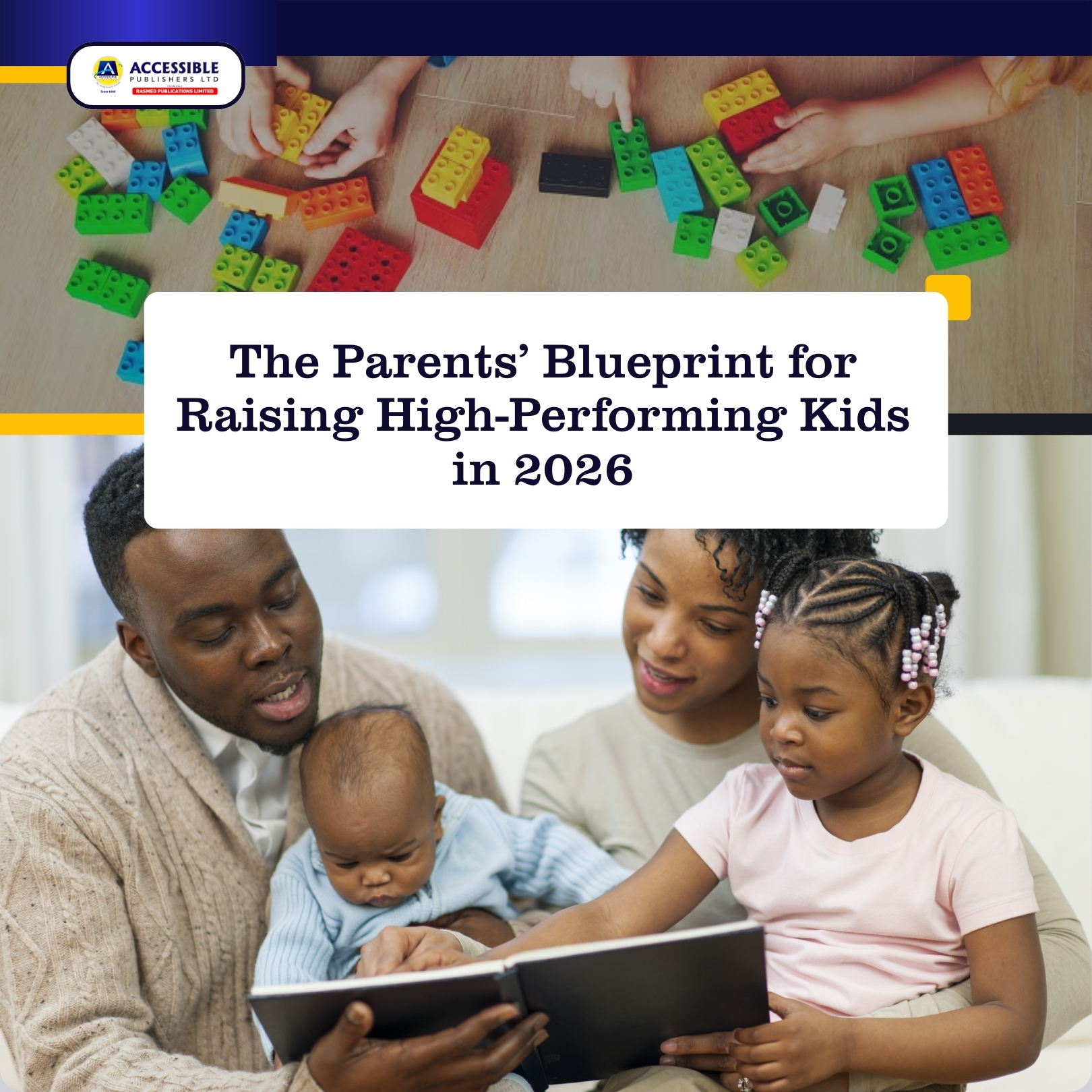
Parenting in 2026 is no longer guided solely by instinct, tradition, or trial and error. It is increasingly shaped by a fast-changing world defined by digital exposure, shifting educational demands, and evolving social values. In this context, raising high-performing kids goes beyond academic excellence; it encompasses emotional intelligence, adaptability, moral grounding, and resilience. For parents, the task is not merely to raise successful children, but to nurture well-rounded individuals who can thrive in complexity.
This blog unpacks the concept of responsible parenthood and offers a clear, practical blueprint for nurturing high-performing children.
Responsible Parenthood: Conceptual Meaning
Responsible parenthood goes beyond the biological act of bringing a child into the world; it is a conscious, lifelong commitment to nurturing a child’s total development. It embodies intentional care (emotional, intellectual, moral, and social), anchored in foresight rather than convenience. In this sense, responsible parenting is not reactive but proactive, requiring parents to anticipate the evolving needs of their children. The home thus becomes the first institution of learning, where values are formed, behaviour is shaped, and attitudes towards life are quietly but powerfully established.
Building on this foundation, responsible parenthood also demands active engagement rather than passive supervision. It involves listening as much as instructing, guiding rather than dictating, and modelling the very values parents hope to instil. Children learn responsibility not merely through rules, but through observation, watching how adults manage conflict, handle failure, and respond to success. Consequently, responsible parenting is as much about who parents are as what they do, making personal discipline, emotional intelligence, and consistency central to effective child-rearing.
Ultimately, responsible parenthood situates parenting within a broader social context, recognising that the child is both a private responsibility and a public trust. The choices parents make regarding education, moral guidance, and emotional support reverberate beyond the household into the wider community. As societies confront new challenges in 2026 and beyond, responsible parenting emerges not only as a personal duty but as a civic contribution with invaluable impacts.
5 Impact of Responsible Parenting on Child Development
To situate this all-important narrative within practical outcomes, the discussion now turns to five distilled impacts of responsible parenting on child development. Responsible parenting:
Enhances emotional stability
Children raised in responsive and supportive environments are better equipped to manage low self-esteem and interpersonal relationships. For example, a child who grows up in a home where elders listen patiently, correct with care, and allow children to express themselves respectfully is more likely to develop emotional balance. Such children tend to approach challenges in school and community settings with confidence rather than fear.
Improves academic and cognitive performance
Responsible parenting fosters curiosity, discipline, and a positive attitude towards learning. These are key drivers of sustained academic success and high performance.
Builds stronger moral and ethical foundations
Responsible parenting is fundamentally underpinned by values such as honesty, empathy, and accountability. A parent who insists on these values lays a solid ethical foundation that shapes children into principled and trustworthy adults.
Enhances greater social competence
Through modelling and guidance, parents help children develop communication skills, respect for diversity, and cooperative behaviour. Children raised in environments that emphasise greetings, communal responsibility, and consideration for others learn early the importance of social harmony. These practices prepare them to navigate classrooms, neighbourhoods, and multicultural spaces with ease.
Strengthens resilience and adaptability
Responsible parenting equips children to adapt, recover, and innovate rather than retreat. Observing parents navigate economic and social challenges as lessons instil endurance and problem-solving skills, fostering resilience that becomes invaluable in education, work, and civic life.
Practical Blueprint for Raising High-Performing Kids in 2026
Raising high-performing children in 2026 demands deliberate and informed strategies. Here are four practical ways parents can adopt to achieve this:
Cultivate a home of learning
Parents should make their homes a space where curiosity and knowledge thrive. This can come by way of encouraging a child to read regularly, ask questions, and engage in discussions.
Demonstrate core values daily
As parents, lead with honesty, respect, empathy, and accountability. Children absorb what they see, not just what they are told. Include them in family decisions, community work, or cultural activities so they learn integrity, responsibility, and social awareness through action.
Balance technology with real-life interaction
This age is defined by technology. Parents should guide their children in using digital tools responsibly. This balance helps develop focus.
Build resilience and problem-solving skills
Children should be encouraged to handle real-life responsibilities. Such experiences cultivate endurance, strengthen resilience, and develop confidence in their academics and the wider world.
In all,
High-performing children are not accidental outcomes; they are the product of conscious, consistent, and responsible parenting. As 2026 unfolds, parents stand at a critical intersection. The blueprint is clear: raise children who are not only prepared to compete, but also equipped to contribute.
Check out our literature catalogue to discover an array of titles that can help motivate children to keep turning the pages. It’s time to explore and embark on an enriching literary journey.
Click this link to learn more about us here!
High-Performing Kids High-Performing Kids High-Performing Kids