
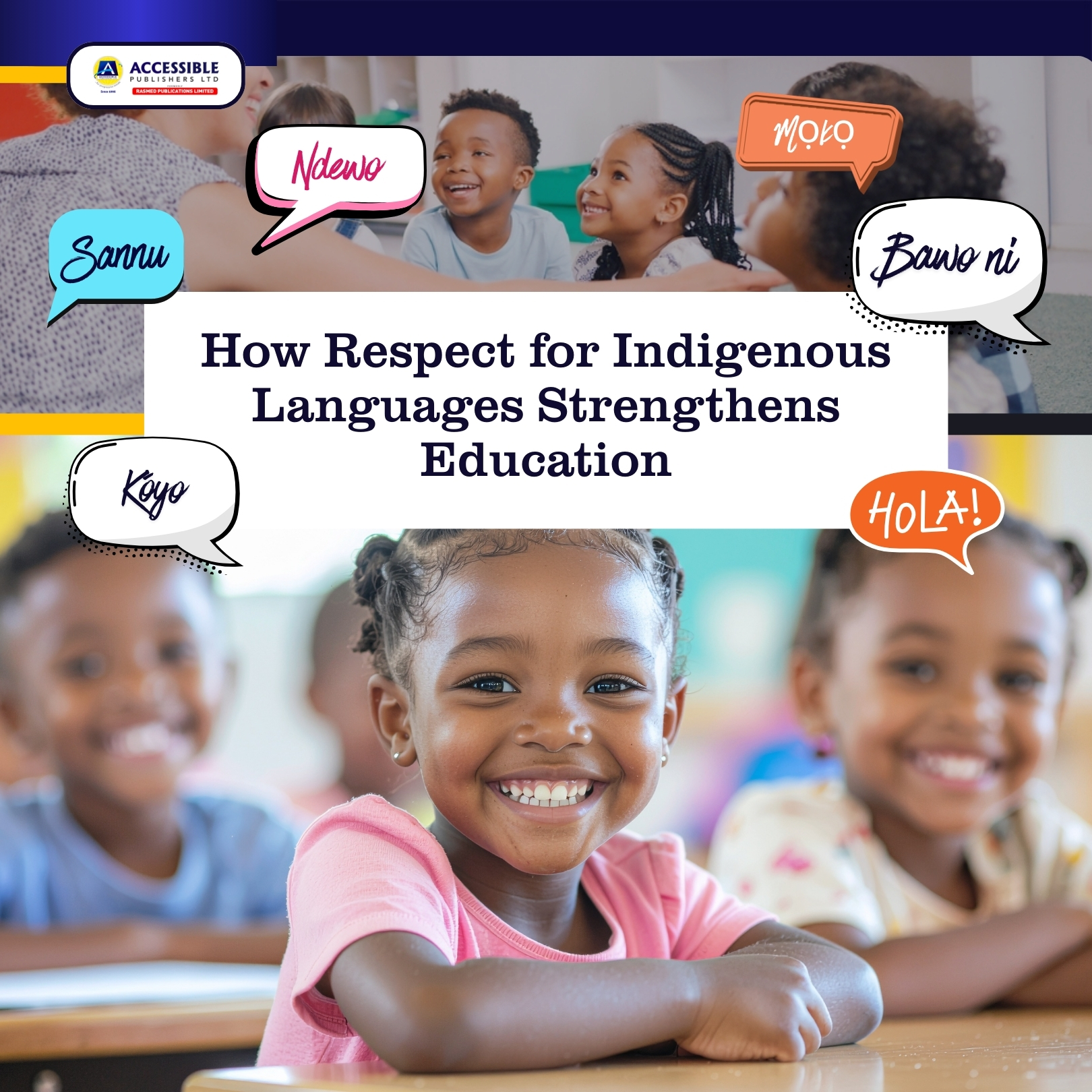
Language is not merely a tool for communication; it is the architecture of thought. Every concept a child grasps, every question they ask, and every idea they form is filtered through language. Yet in many African classrooms, indigenous languages remain peripheral, overshadowed by inherited colonial systems that equate foreign tongues with intellectual superiority.
If education is meant to develop the whole person — intellectually, socially, and culturally — then the language of instruction cannot be an afterthought. It must be foundational.
This blog decodes the 2026 Mother Language theme, examines the nexus between indigenous languages and education, and outlines five advantages of indigenous languages for educational development.
Understanding the 2026 Mother Language Theme
The 2026 theme for International Mother Language Day (21 February), observed under the auspices of UNESCO, is “Youth voices on multilingual education.” This theme shifts the spotlight to young people, not merely as beneficiaries of language policy, but as active agents of change. It recognises the vital role youth play in revitalising endangered languages, creating digital content in indigenous tongues, and advocating inclusive educational systems.
Importantly, the theme underscores technology as a bridge rather than a barrier. From podcasts and social media platforms to coding interfaces and online learning tools, young people are increasingly using digital spaces to expand the presence of indigenous, migrant, and minority languages.
At its core, the 2026 theme reinforces a powerful truth: multilingualism is not an anomaly; it is a fundamental human characteristic. When nurtured properly, it becomes a driver of sustainable development, social cohesion, and educational equity.
The Nexus Between Indigenous Language and Education
Education and language are inseparable. Every concept – whether mathematical, scientific, or philosophical – is processed through linguistic structures. When instruction occurs in a foreign language too early, cognitive energy is diverted from understanding content to decoding vocabulary.
Research in educational psychology consistently shows that foundational learning is strongest when delivered in a learner’s first language. Indigenous languages carry familiar idioms, metaphors, and cultural references that make abstract ideas accessible. A child learning fractions through culturally relevant examples in Yoruba, Igbo, Hausa, or Ijaw is not merely memorising; they are internalising.
Beyond cognition, there is identity. Language shapes self-worth. When indigenous languages are sidelined, students unconsciously receive the message that their heritage is inferior. Conversely, when schools elevate these languages, learners gain confidence and cultural grounding.
Thus, respect for indigenous languages strengthens both intellectual competence and emotional resilience.
Five Advantages Indigenous Languages Offer Education
The following five advantages reveal why indigenous languages remain indispensable to meaningful learning.
1. Enhanced Academic Performance
Children understand concepts more quickly when taught in their mother tongue. Literacy and numeracy skills are strengthened because comprehension precedes memorisation.
2. Stronger Cognitive Flexibility
Multilingual learners develop sharper cognitive abilities, including problem-solving and critical thinking. Learning first in an indigenous language and then acquiring additional languages builds mental agility.
3. Cultural Continuity
Indigenous languages carry proverbs, histories, moral codes, and collective memory. Incorporating them into education safeguards cultural heritage while forming grounded citizens capable of global engagement.
4. Youth-Led Innovation
In line with the 2026 theme, young people are leveraging technology to revitalise indigenous languages. From digital storytelling to educational apps, youth engagement ensures that indigenous languages evolve rather than stagnate.
5. Social Inclusion and Cohesion
Language inclusion reduces marginalisation. When schools recognise indigenous and minority languages, learners feel seen and valued. This strengthens social harmony and promotes equitable access to education.
Conclusion
The 2026 theme, “Youth voices on multilingual education”, reminds us that language preservation is not only about protecting the past; it is about empowering the future. Young people are not waiting for permission to defend their linguistic heritage; they are already using technology and creativity to expand it.
Respect for indigenous languages strengthens education because it strengthens learners. It affirms identity, enhances comprehension, and builds inclusive societies.
Education that ignores language diversity risks producing alienated graduates. Education that embraces it produces confident, culturally rooted global citizens.
Check out our literature catalogue to discover an array of titles that can help motivate children to keep turning the pages. It’s time to explore and embark on an enriching literary journey.
Click this link to learn more about us here!