Talented people are often seen as exceptional, earning both praise and admiration. But while having talent is one thing, putting it to use is another. Talent takes many forms, and so does its discovery. It cut across several domains. But one thing remains core: school often sets the stage.
For many, school is not just a place of grades, but a space where hidden gifts begin to unfold in students. And the truth is, every student carries a different spark. Some stand out in the business of the class, others shine in sports, music, leadership, or creative expression. The question is: how can schools harness these diverse potentials and nurture the unique spark in every student?
This guide answers this and expands the conversation further.
Understanding Talent in Children
There are numerous definitions of the term ‘talent’. One perspective includes children who are underachieving and their performance might not be exceptional in school, but can be considered to have further potential in one or more of the mental, creative, social, emotional and artistic fields. This is just one example, but it underscores a fundamental truth: talent is not one-dimensional. It extends far beyond test scores and traditional measures of academic performance. Children thrive in environments where their interests are nurtured and their unique strengths are recognised and supported. Understanding talent in children involves recognising and nurturing their ‘natural’ abilities and passions. This recognition must be intentional and sustained, requiring collaboration from both homes and schools.
For instance, a student gifted in music may not top their class in Mathematics, but could move an audience with a single performance. That’s one way talent shows up. Equally, a child who settles disputes could be a leader in the making. This, however, is not to downplay the importance of academic performance. Good grades still count. But true growth comes when talent and effort go hand in hand.
Why Schools Serve as a Centre for Talent Discovery
Students spend a large chunk of their day at school. Given the amount of time spent, it naturally becomes a primary space for talent identification and development, even as parents and peers contribute to the process. These factors position the school as a standout in this regard.
a. Teachers’ Position
Teachers often serve as the first mentors and talent spotters. Through regular interaction and assessment, they are in a prime position to observe behavioural patterns, academic inclinations, and special skills among students.
b. Leadership Opportunities
Roles like prefectship, class captain, or team leads in schools help students discover skills in communication, teamwork, and decision-making.
c. Extracurriculars and Competitions
Clubs, sports, debates, and arts provide platforms for students to showcase hidden talents. Students who may not excel in traditional classroom settings often find their voice and self-worth through these platforms.
d. Thriving Space
Schools allow students to try new things without fear of failure, encouraging creativity and innovation.
e. Cross-field Interaction
In schools, students engage with various disciplines from sciences to humanities to sports, giving multiple talents the chance to surface and take shape.
Unique Ways Schools Can Help Students Discover Their Talents
Uncovering talent is a product of process, built into structure. These key practices show how schools can help students uncover and grow their abilities.
a. Setting up of Interest-based Clubs
Schools can set up clubs across diverse interests from drama, debate, and music to science, robotics, agriculture, and entrepreneurship. These platforms allow students to explore what they naturally enjoy, helping them discover and develop their talents.
b. Peer Teaching Opportunities
Allowing students to teach or mentor peers in subjects they excel at boosts confidence and reveals students who may be naturally gifted in teaching, tutoring, and public speaking.
c. Talent Exhibitions
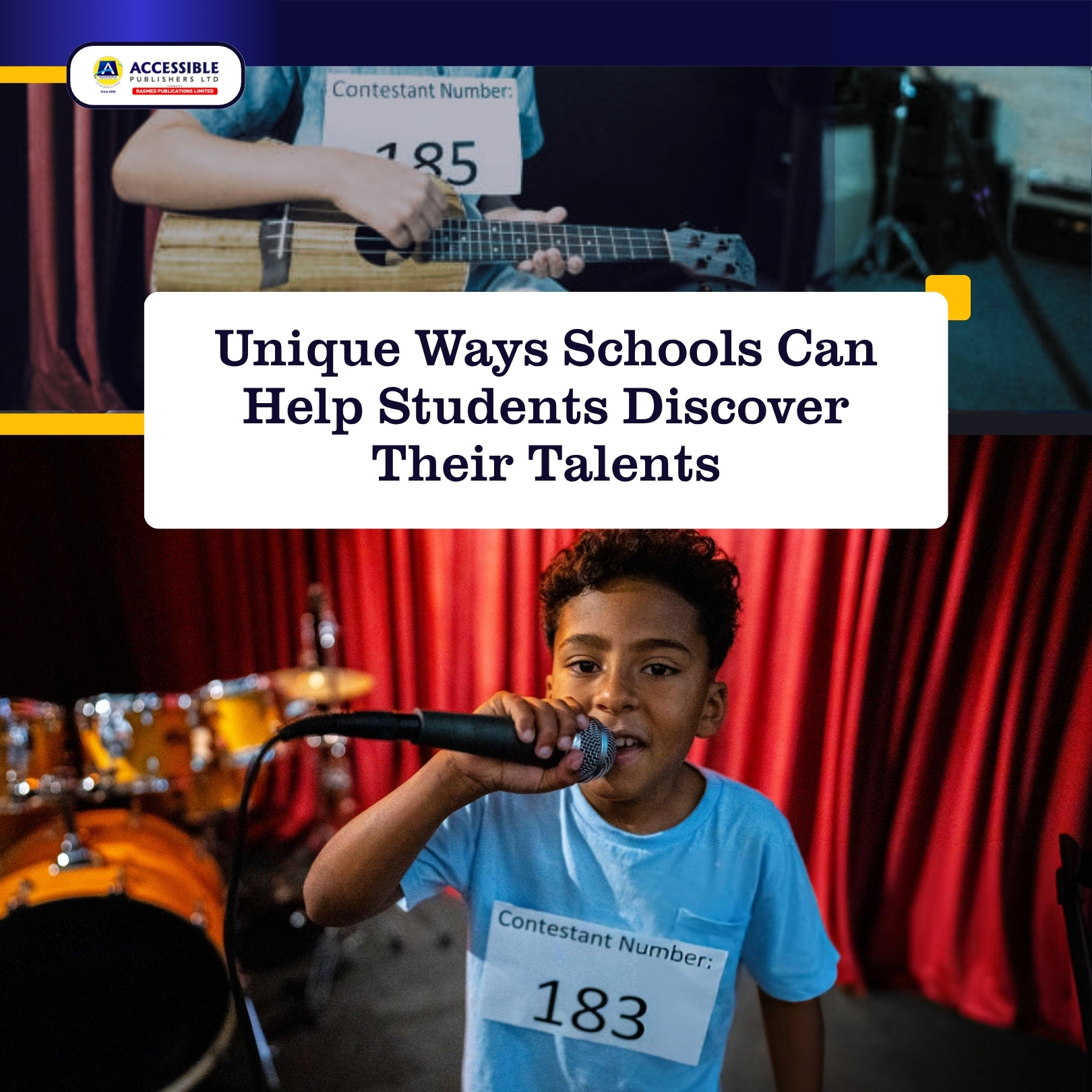
Talent exhibitions, skill fairs, inter-house competitions, and talent hunts should be prioritised. These events give students the stage to showcase hidden abilities and build confidence in areas beyond academics.
d. Rotational Leadership Roles
Giving all students a chance to lead, whether as class captains, project heads, group leaders, or event coordinators, allows the school to observe leadership qualities, organisational skills, and team spirit in different students. Some may shine outside their usual academic comfort zones.
e. Parent-School Collaboration
Parents sometimes narrow their children’s paths by focusing solely on academics. Teachers and parents should partner to support talents in diverse areas, helping children thrive in both academic and non-academic pursuits.
Conclusion
Schools are more than centres of learning – they are launching pads for future stars. In the absence of these citadels, many latent talents may go unnoticed. The onus now lies on teachers and administrators to rise to the occasion, ensuring that every student finds a path to a purposeful and productive life.
Now is the time to act!
Check out our literature catalogue to discover an array of titles that can help motivate children to keep turning the pages. It’s time to explore and embark on an enriching literary journey.
Click this link to learn about us here!