
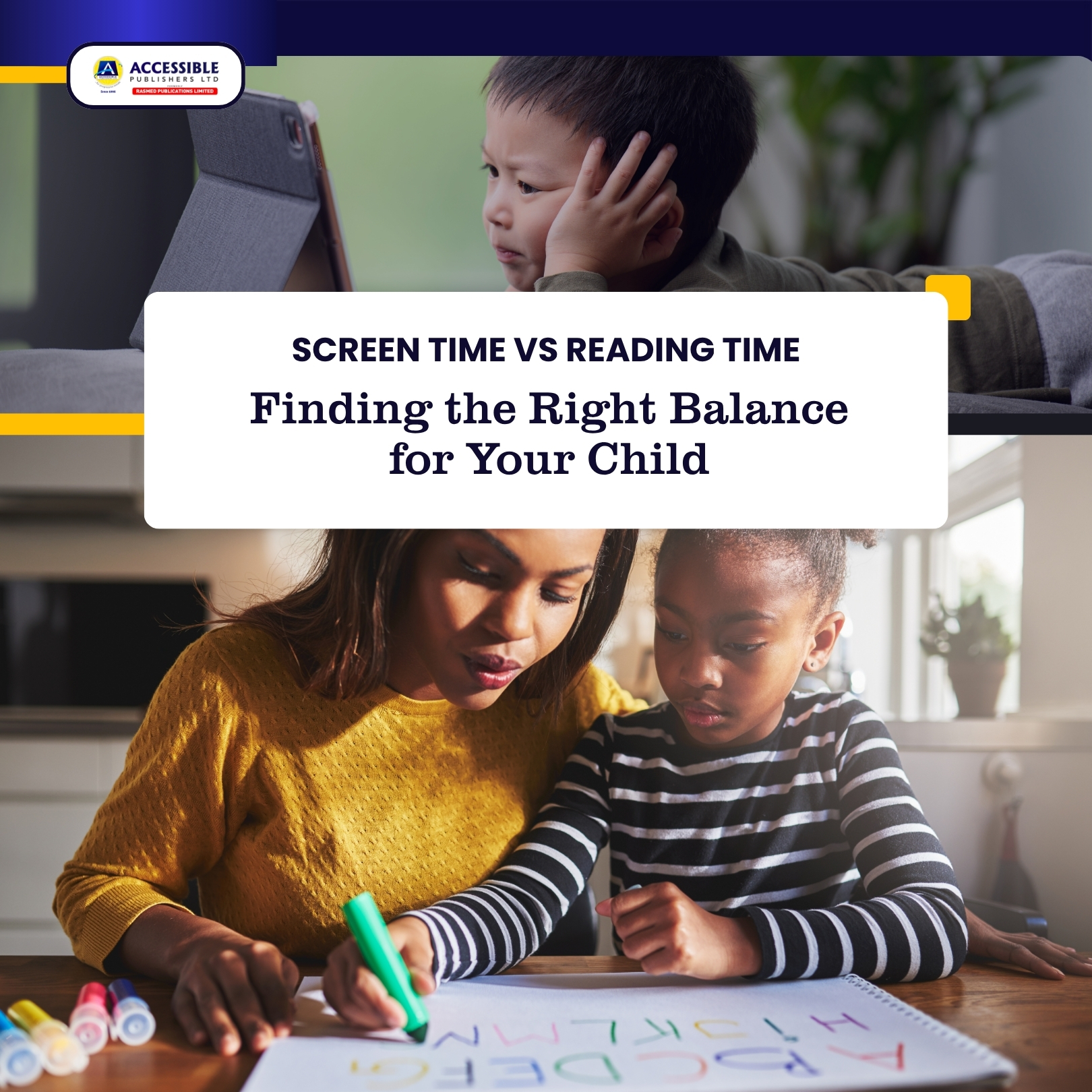
In today’s digital age, screens are everywhere: smartphones, tablets, televisions, and laptops all competing for your child’s attention. From educational apps to entertaining cartoons, technology has become an inseparable part of modern childhood. Yet, quietly sitting on shelves or tucked into school bags are books—timeless tools that have shaped generations of thinkers, leaders, and innovators.
As a parent, teacher, or education enthusiast, you may often wonder: How much screen time is too much? And where does reading fit into all of this? Finding the right balance between screen time and reading time is no longer optional; it is essential for raising well-rounded, intellectually curious children.
As the saying goes, “Children are made readers on the laps of their parents.” In a world of constant digital stimulation, nurturing this habit requires intentional effort.
Understanding Screen Time: Benefits and Risks
Screen time is not entirely negative. In fact, when used appropriately, it offers valuable benefits. Educational programs, eBooks, and interactive learning platforms can enhance comprehension, improve digital literacy, and expose children to diverse ideas and cultures.
However, excessive screen time presents significant risks. Studies have linked prolonged screen exposure to reduced attention span, sleep disruption, and limited social interaction. Children who spend too much time on screens may also develop a passive approach to learning, relying heavily on visuals rather than engaging their imagination.
Moreover, not all screen content is created equal. While some materials are educational, others may be distracting or even harmful, making parental supervision crucial.
Why Reading Remains Essential for Every Child
Despite technological advancements, reading remains one of the most powerful tools for a child’s development. Unlike screen-based content, reading requires active participation. Children visualise, interpret, and engage deeply with the material.
Reading helps to:
- Build strong vocabulary and language skills
- Improve concentration and critical thinking
- Stimulate imagination and creativity
- Develop empathy by exposing children to diverse characters and experiences
Books encourage children to think beyond what is presented, fostering independent thought and problem-solving skills. As Dr Seuss famously said, “The more that you read, the more things you will know. The more that you learn, the more places you’ll go.”
In essence, reading lays the intellectual foundation that screens alone cannot provide.
Screen Time vs Reading Time: Striking the Right Balance
The goal is not to eliminate screen time but to manage it effectively while prioritising reading. Both can coexist when structured properly.
Balance begins with understanding that screen time should complement—not replace—reading. For example, a child might watch an educational video on a topic and then read a book that expands on the same subject. This creates a richer learning experience.
Establishing clear boundaries is key. Children thrive on structure, and setting limits ensures they do not default to screens as their primary source of engagement.
Practical Strategies for Parents
Achieving balance requires deliberate action. Here are practical steps parents can take:
Set Clear Screen Time Limits
Define how much time your child can spend on screens daily, based on their age. Ensure these limits are consistent and enforced.
Create a Daily Reading Routine
Dedicate specific times for reading—before bedtime, after school, or during quiet hours. Consistency helps build a lasting habit.
Make Books Accessible and Appealing
Keep books within easy reach at home. Choose engaging, age-appropriate, and culturally relevant materials that capture your child’s interest.
Be a Role Model
Children often imitate adults. When they see you reading regularly, they are more likely to develop the same habit.
Encourage Screen-Free Zones
Designate certain areas or times—such as the dining table or bedtime—as screen-free to promote reading and family interaction.
Blend Learning Approaches
Use screens for educational purposes and follow up with related reading materials. This reinforces knowledge and deepens understanding.
Conclusion: Raising Balanced, Future-Ready Children
In a world driven by technology, the challenge is not choosing between screens and books—it is learning how to use both wisely. While screens offer convenience and access to information, reading builds the depth of understanding and critical thinking that children need to thrive.
By intentionally creating a balance, parents and educators can nurture children who are not only digitally literate but also intellectually grounded. These are the children who will grow into thoughtful, innovative, and adaptable individuals.
Ultimately, the goal is clear: raise children who can navigate screens confidently but still find joy, knowledge, and inspiration within the pages of a book.
Check out our literature catalogue to discover an array of titles that can help motivate children to keep turning the pages. It’s time to explore and embark on an enriching literary journey.
Click this link to learn more about us here!