Every child’s journey into knowledge often begins with a story.
Long before classrooms, examinations, and textbooks, children encounter the world through colourful pages, memorable characters, and lessons wrapped in adventure. A single well-written children’s book can spark curiosity, nurture imagination, and plant the first seeds of a lifelong love for reading. It is through these early encounters with books that children begin to ask questions, dream bigger, and understand the world around them.
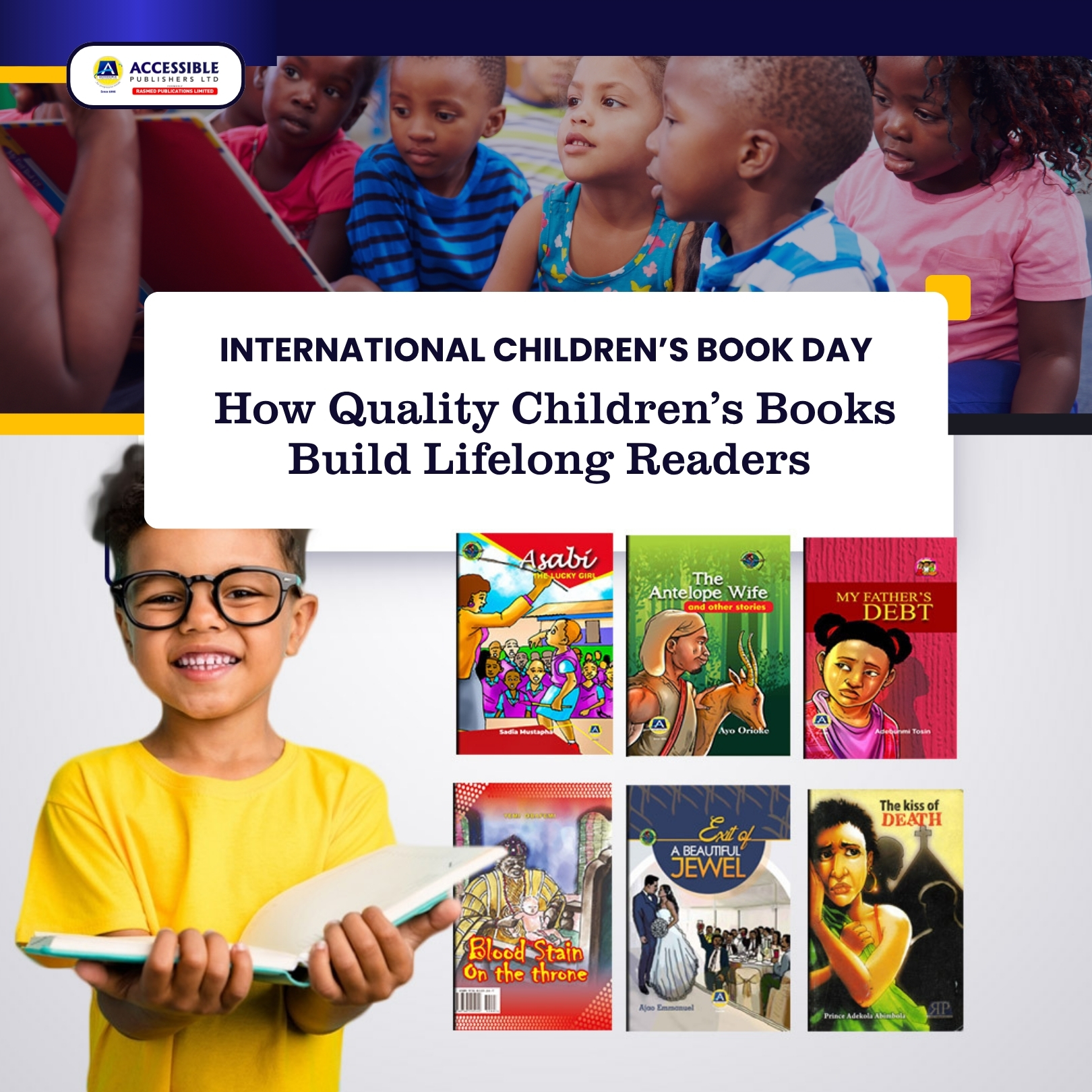
This is why International Children’s Book Day is more than just a date on the calendar. It is a global celebration of stories, literacy, and the powerful role books play in shaping young minds.
As the saying goes, “Readers are leaders.” While simple, this quote captures an enduring truth: children who develop strong reading habits early are better positioned for academic excellence, critical thinking, and personal growth.
For parents, teachers, school owners, and everyone passionate about education, this day serves as a timely reminder that quality children’s books are not merely for entertainment; they are foundational tools for learning and character development.
In this article, we explore what International Children’s Book Day represents and how quality children’s books help build lifelong readers.
What International Children’s Book Day Represents
International Children’s Book Day is celebrated every year on April 2nd to inspire a love for reading and to draw attention to the importance of children’s literature. The day is observed globally in honour of Hans Christian Andersen, the renowned Danish author widely known for timeless children’s stories such as The Little Mermaid and The Ugly Duckling.
The celebration highlights the significance of books in a child’s intellectual, emotional, and moral development. It also encourages authors, publishers, educators, and parents to invest intentionally in literature that enriches children’s learning experiences.
Beyond celebration, the day advocates for access to quality books for every child, regardless of background. In a world increasingly dominated by digital distractions, International Children’s Book Day reminds us that books remain one of the most powerful tools for shaping minds and futures.
For educational stakeholders in Nigeria and beyond, this day is an opportunity to promote literacy, storytelling, and a culture of reading among young learners.
Why Reading Should Start Early
Reading should begin as early as possible because the early years are critical for cognitive and language development.
From infancy through the primary school years, children’s brains are rapidly developing. Exposure to books during this period helps improve vocabulary, listening skills, comprehension, and communication abilities. Even before a child can read independently, listening to stories read aloud helps them connect sounds with words and ideas.
Early reading also strengthens concentration and memory. Children who grow up around books often develop stronger comprehension skills that positively affect performance in other subjects such as Mathematics, Science, and Social Studies.
More importantly, reading early builds familiarity and comfort with books.
When books become a natural part of a child’s environment, reading feels less like a school task and more like an enjoyable habit. This is what gradually transforms children into lifelong readers.
As Dr Seuss once said, “The more that you read, the more things you will know. The more that you learn, the more places you’ll go.”
This quote perfectly captures the limitless possibilities that reading opens up for children.
What Makes a Great Children’s Book?
Not every children’s book leaves a lasting impact. A great children’s book combines education, engagement, and relevance.
Here are some qualities that make a children’s book truly impactful:
1. Age-Appropriate Language
The language should suit the child’s reading level and stage of development. Books for younger children should use simple, clear, and engaging expressions, while books for older children can introduce more advanced vocabulary.
2. Strong Moral and Educational Value
Children’s books should do more than tell stories; they should teach valuable lessons such as honesty, kindness, resilience, teamwork, and responsibility.
3. Relatable Characters and Contexts
Children connect better with stories they can relate to. Books that reflect familiar experiences, school life, family relationships, and cultural realities help deepen engagement and understanding.
4. Imaginative and Engaging Storytelling
A good story should capture attention from the beginning and keep the child interested till the end.
5. Quality Illustrations and Design
For younger readers especially, colourful illustrations help improve comprehension and stimulate imagination.
When these elements come together, books become powerful tools for both learning and enjoyment.
How Publishers Help Shape Young Minds Through Books
Publishers play a critical role in building lifelong readers.
Behind every one of our children’s books is a deliberate process of writing, editing, illustration, curriculum alignment, and thoughtful production. We ensure that books are not only engaging but also educationally relevant and developmentally appropriate.
For Accessible Publishers, this responsibility is even more significant.
By producing curriculum-compliant textbooks, storybooks, and literature texts, publishers contribute directly to literacy development in schools and homes. We help provide learning resources that support teachers in the classroom and parents at home.
Publishers also shape young minds by ensuring cultural relevance.
Children need books that reflect their identities, experiences, languages, and environment. When children see themselves represented in books, reading becomes more meaningful and impactful.
This is particularly important in Nigeria’s educational space, where books can help preserve language, culture, and values while promoting academic excellence.
Ultimately, we are not just producing books; we are helping to shape future thinkers, innovators, and leaders.
Conclusion
International Children’s Book Day is a powerful reminder that quality children’s books are essential in building lifelong readers.
From early childhood through adolescence, books help children learn, imagine, and grow into informed individuals. They strengthen literacy skills, broaden perspectives, and nurture the confidence needed for lifelong learning.
For parents, teachers, school owners, and education lovers, the message is clear: investing in quality children’s books is an investment in the future.
When children are surrounded by meaningful stories and educational resources, they are more likely to become readers for life—and readers, indeed, become leaders.
Check out our literature catalogue to discover an array of titles that can help motivate children to keep turning the pages. It’s time to explore and embark on an enriching literary journey.
Click this link to learn more about us here!