
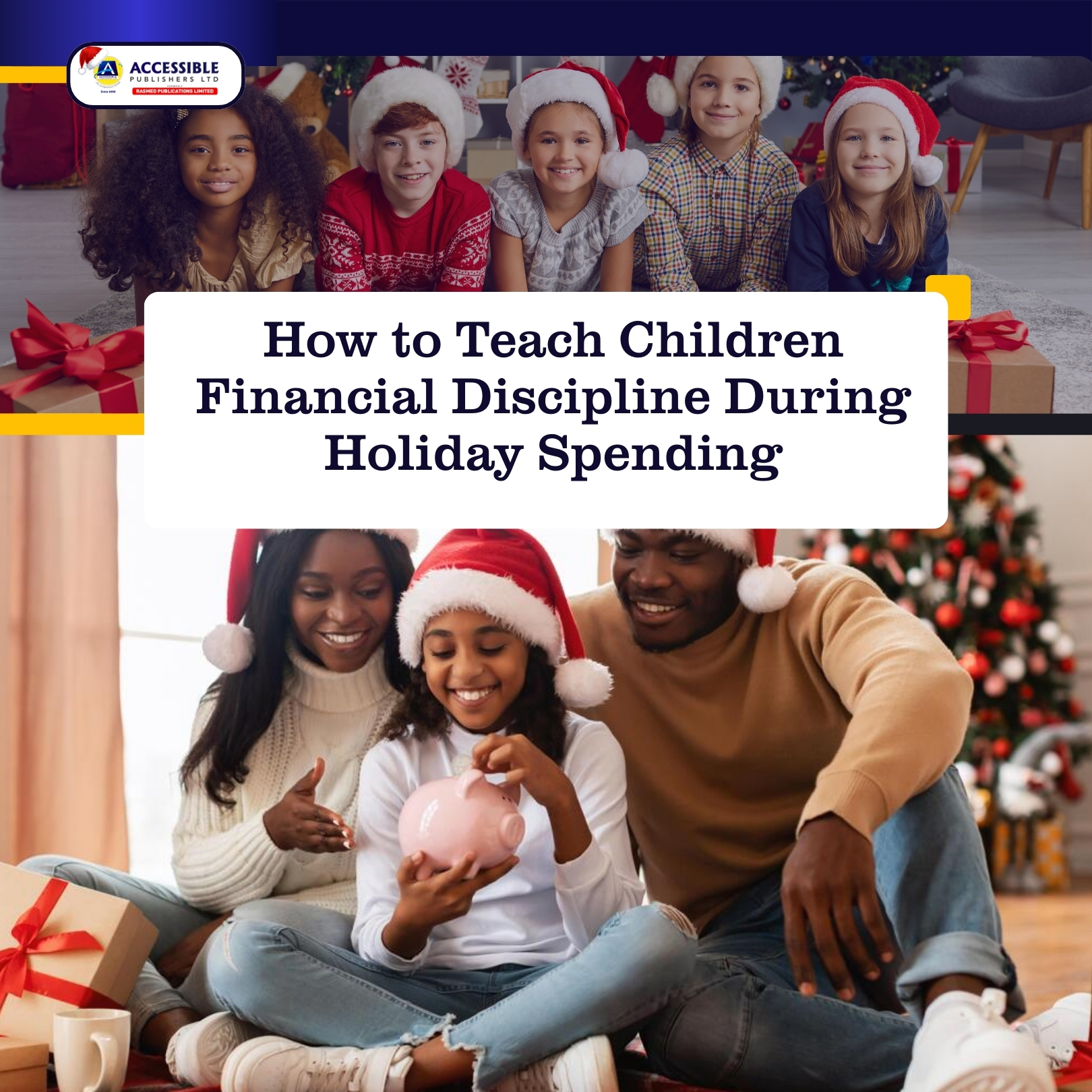
The holiday season often comes with a warm glow: decorations, family gatherings, special meals, and, of course, spending. For many households, December is a month when budgets stretch, wish-lists grow, and children are exposed to the excitement of buying and receiving. Yet beneath the festivities lies a powerful teaching opportunity. If handled intentionally, the holidays can become a practical classroom for financial discipline – one that shapes children’s habits long after the season ends.
This blog examines why children need financial lessons this December, outlines practical tools for teaching money management, and highlights how parents can model financial discipline during the festive season.
Why Children Need Financial Lessons During The December Holiday
December presents a perfect storm of financial stimuli. Shops are louder, adverts are brighter, and peer pressure is stronger. Children watch adults spend more freely, and without guidance, they can easily assume that money flows without limits. Teaching financial discipline during this period helps them understand the difference between needs and wants, the value of planning ahead, and the importance of making mindful choices.
Beyond the noise of holiday excitement lies an emotional element. Many children associate December with abundance – gifts, outings, food, and a sense of plenty. Without intentional guidance, they may grow into adults who link celebration with excessive spending. Financial lessons offered in this season gently correct that impression by showing that joy does not depend on stretching beyond one’s means.
There is also the pressure of social comparison. School conversations about gifts, new clothes, and holiday trips can make some children feel left behind. Teaching them about budgeting and value helps to build emotional resilience, enabling them to understand that families operate with different financial realities and that this is normal. These lessons, though subtle, instil confidence and reduce the anxiety that often surfaces during festive periods. December, therefore, becomes not just a festive month but a formative one, offering financial insights that can shape their habits well into adulthood.
Practical Tools for Teaching Money Management
Teaching children how to handle money doesn’t have to be complicated. Below are practical tools that help children understand budgeting, choices, and responsibility.
- Set a Holiday Budget Together
Give your child a specific amount for gifts or activities. Let them list what they want to spend on and compare it with the budget. It helps them learn to prioritise and make choices..
- Use the “Save–Spend–Share” Method
Provide three jars or envelopes. A portion of their holiday money goes into each: one to save, one to spend, and one to give. This helps children develop balance and responsibility.
- Encourage Comparison Shopping
Whether in-store or online, guide them to compare prices, check alternatives, and think about value over excitement. This builds early consumer awareness.
- Involve Them in Simple Purchases
Let them handle the cash or make the digital payment (under supervision). Engaging with the process demystifies money and reduces the belief that it is endless.
- Keep a Mini Holiday Log
A short note of what they spent money on and why. It turns reflection into a natural part of financial behaviour.
How Parents Can Model Financial Discipline This Holiday
Children learn more from what they see than what they hear. When parents practise financial moderation, children naturally pick up the habit. This can be as simple as explaining why a purchase is delayed, showing how the family budget works, or letting them see you compare prices before making a purchase.
Equally, showing generosity within limits, rather than extravagant spending, helps children understand that celebrations do not require financial excess. When adults demonstrate balance, children follow suit.
These everyday actions, even when small, go a long way in shaping a child’s financial behaviour.
Conclusion
In the end, December offers far more than festivities; it offers teachable moments that can shape a child’s financial future. If parents embrace the season with intention, they gift their children something far more lasting than toys or gadgets – the foundation of financial wisdom.
Check out our literature catalogue to discover an array of titles that can help motivate children to keep turning the pages.
Click here to learn more about us.