
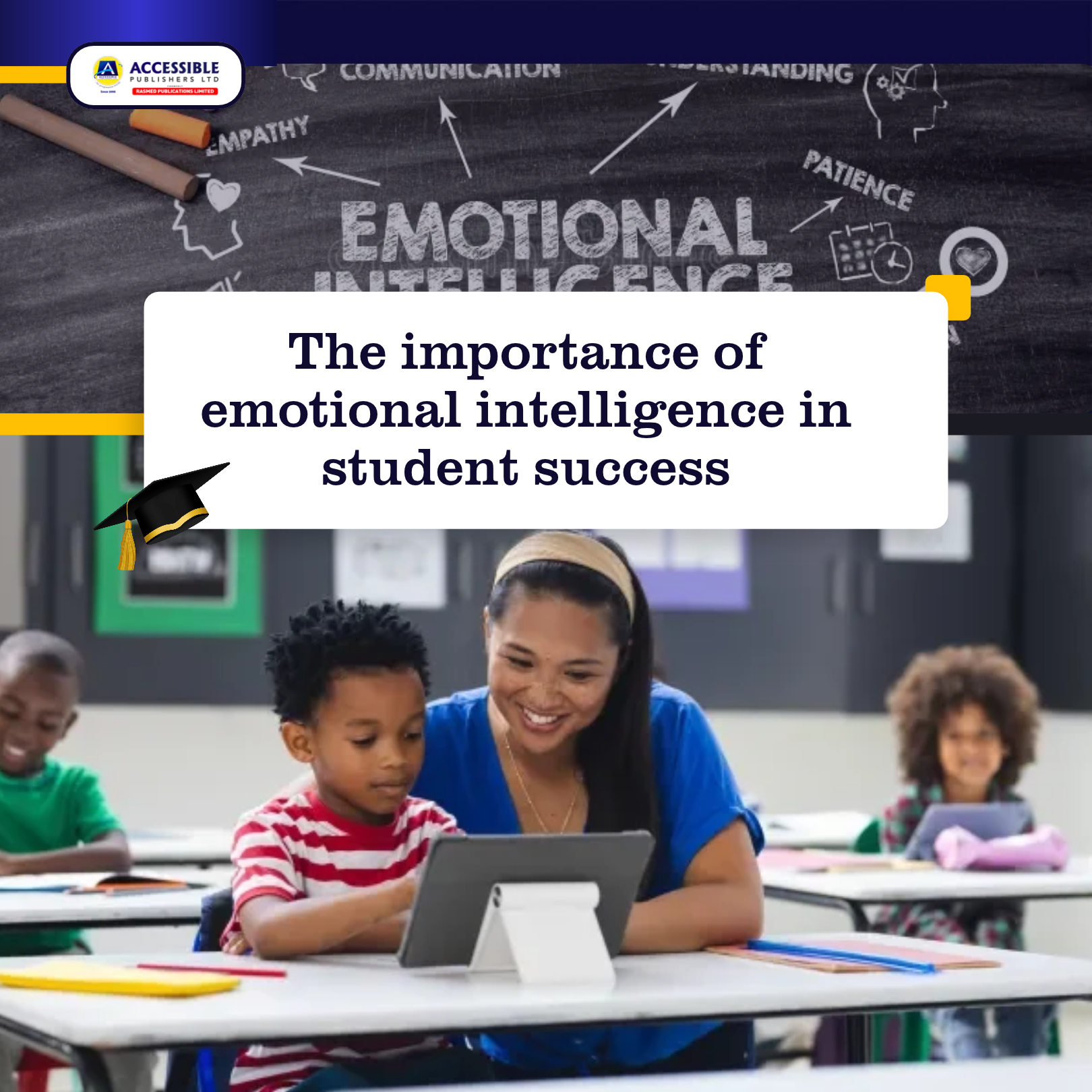
A student can be brilliant in Mathematics, fluent in English, and consistently at the top of the class—and still struggle in ways that grades cannot explain.
Perhaps they become overwhelmed whenever they make a mistake. Maybe they find it difficult to work with classmates, lose motivation easily, struggle to manage exam pressure or react angrily when things do not go their way.
This is where emotional intelligence comes in.
Education is not only about what students know. It is also about how they manage what they feel, respond to challenges, relate with others and make decisions. A student who understands their emotions and knows how to manage them is often better equipped to concentrate, build healthy relationships, handle setbacks and make the most of learning opportunities.
As psychologist Daniel Goleman famously puts it, “Emotional intelligence is the sine qua non of leadership.” While students may not yet be leading organisations, the same principle applies to their everyday lives: managing emotions is an important part of managing oneself.
So, what exactly is emotional intelligence, and how can it contribute to student success?
What Is Emotional Intelligence and Why Does It Matter?
Emotional intelligence (EI) is the ability to recognise, understand and manage our own emotions while also recognising and responding appropriately to the emotions of others.
For students, emotional intelligence can show up in simple but important situations:
- Staying calm when faced with a difficult examination question.
- Knowing when frustration is affecting concentration.
- Accepting correction without immediately becoming defensive.
- Understanding how a classmate may feel during a disagreement.
- Asking for help when a task becomes overwhelming.
- Managing disappointment after receiving a lower grade than expected.
- Working respectfully with classmates who have different opinions.
Emotional intelligence is often associated with five key abilities: self-awareness, self-regulation, motivation, empathy and social skills.
Self-awareness
This involves recognising one’s emotions and understanding how they influence thoughts and behaviour. A self-aware student can identify that they are anxious before an examination rather than simply concluding, “I cannot do this.”
Self-regulation
Students experience anger, disappointment, excitement, fear and frustration. Emotional intelligence helps them respond to these emotions appropriately instead of allowing temporary feelings to control their actions.
Motivation
Emotionally intelligent students can develop the ability to stay focused on their goals, even when learning becomes difficult. They begin to understand that struggling with a subject does not necessarily mean they are incapable of learning it.
Empathy
Empathy helps students understand the feelings and perspectives of others. It can improve friendships, classroom relationships, teamwork and communication.
Social skills
Learning is rarely an individual activity. Students participate in group projects, classroom discussions, clubs, competitions and other activities. Strong social skills help them communicate, collaborate and resolve disagreements constructively.
Ultimately, emotional intelligence matters because academic success does not happen in an emotional vacuum. Students bring their fears, confidence, frustrations, relationships and personal experiences into the classroom every day.
The Impact of Emotional Intelligence on Academic Performance
When people think about academic performance, they often focus on intelligence, study time, teaching quality and access to learning materials. These are undoubtedly important, but emotional factors can also influence how effectively a student learns.
It improves concentration and focus
A student who is constantly worried, angry or overwhelmed may find it difficult to concentrate on a lesson.
Emotional intelligence helps students recognise emotional distractions and develop healthier ways of managing them. This can make it easier to return their attention to the task at hand.
For example, a student preparing for a major examination may feel anxious about failing. Rather than allowing that fear to prevent studying, the student can acknowledge the anxiety, break the study task into smaller parts and focus on what can be done.
It helps students manage academic pressure
Tests, examinations, assignments and academic expectations can create considerable pressure.
Students with emotional intelligence are better positioned to identify stress and respond to it constructively. Instead of immediately giving up after performing poorly, they can reflect on what went wrong and determine what they can improve.
This ability to recover from setbacks is particularly important because success in education is rarely a straight line.
It encourages a growth mindset
Emotional intelligence can help students separate a poor result from their sense of self-worth.
There is an important difference between saying:
“I failed this test, so I am not intelligent.”
and:
“I did not perform well on this test. What can I do differently next time?”
The second response creates room for learning and improvement.
It improves relationships with teachers and classmates
A student’s learning environment can influence their educational experience. Students who communicate respectfully, listen to others and manage disagreements effectively are more likely to build positive relationships within the school community.
Good relationships can also encourage students to ask questions, seek clarification and participate more actively in learning.
It supports better decision-making
Students make decisions every day—how to respond to peer pressure, whether to complete an assignment, how to handle conflict and how to balance schoolwork with other activities.
Emotional intelligence encourages students to pause and consider their emotions, consequences and options before acting impulsively.
In this way, emotional intelligence contributes to academic performance and overall student development, rather than simply helping students get better grades.
Strategies for Cultivating Emotional Intelligence in Students
Emotional intelligence is not something students either have or do not have. It can be developed and strengthened through intentional practice at school and at home.
Here are practical strategies parents and educators can use.
Teach students the language of emotions
Sometimes students behave in difficult ways because they cannot properly express what they are feeling.
Instead of simply asking, “What is wrong?”, adults can help students identify specific emotions.
Are they:
- Angry?
- Disappointed?
- Nervous?
- Embarrassed?
- Excited?
- Frustrated?
- Confused?
- Worried?
Giving students the vocabulary to describe their emotions makes it easier for them to communicate and manage those emotions.
Encourage reflection
After a difficult situation, encourage students to reflect rather than simply move on.
Questions such as:
- “How did that situation make you feel?”
- “What caused that feeling?”
- “How did you respond?”
- “What could you do differently next time?”
can help students become more aware of the connection between emotions, thoughts and behaviour.
Teach healthy ways to handle frustration
Students need to understand that experiencing difficult emotions is normal. The goal is not to eliminate anger, fear or frustration but to learn how to respond to them appropriately.
Simple strategies such as taking a short break, deep breathing, talking to a trusted adult, writing down concerns or breaking a difficult task into smaller steps can help.
Use group activities and collaborative learning
Group projects, classroom discussions, games and team-based activities provide opportunities for students to practise communication, cooperation, empathy and conflict resolution.
These activities can turn everyday classroom interactions into valuable lessons in emotional intelligence.
Encourage problem-solving instead of immediate punishment
When a student makes a poor choice, adults can address the behaviour while also helping the student understand what happened.
Instead of focusing only on punishment, ask:
What happened? Why did it happen? Who was affected? What can be done differently next time?
This approach encourages responsibility and self-reflection.
Model emotional intelligence
Children learn a great deal by observing adults.
Teachers and parents who demonstrate patience, respectful communication, empathy and appropriate emotional regulation provide students with practical examples of what emotional intelligence looks like.
The Role of Teachers and Educators in Fostering Emotional Intelligence
Teachers have an important role to play because students spend a significant part of their lives within educational environments.
A teacher does not have to become a therapist to support emotional intelligence. Small, consistent classroom practices can make a meaningful difference.
Create a safe and respectful classroom
Students learn better when they feel respected and comfortable expressing themselves.
Teachers can establish classroom expectations that promote listening, kindness, respect and constructive disagreement. When students understand that mistakes are part of learning, they may also become more willing to participate and ask questions.
Recognise that students respond differently
Two students may experience the same academic challenge but respond completely differently.
One may ask for help. Another may become withdrawn. A third may become frustrated or disruptive.
Understanding these differences can help teachers respond to students more effectively rather than assuming that every difficult behaviour has the same cause.
Make emotional check-ins part of the classroom
A simple check-in at the beginning of a lesson can help students become more aware of their emotional state.
For example, teachers might ask students to describe their mood using a word, number scale or emotion chart.
These brief activities can encourage students to recognise and communicate how they feel.
Teach conflict resolution
Disagreements between students are inevitable. Rather than always stepping in to solve every conflict, teachers can guide students through the process of listening, explaining their perspectives, understanding the other person’s viewpoint and finding a reasonable solution.
This equips students with skills they can use far beyond the classroom.
Praise emotional and social growth
Academic achievement deserves recognition, but so does personal growth.
A teacher might acknowledge a student for:
- Remaining calm during a disagreement.
- Helping a struggling classmate.
- Accepting correction positively.
- Continuing to work after making a mistake.
- Expressing frustration appropriately.
- Showing empathy towards another student.
Such recognition communicates an important message: success is not only about being the student with the highest score. It is also about becoming a capable, responsible and emotionally resilient person.
Conclusion
Academic knowledge may open doors, but students also need the emotional skills to navigate what lies beyond them.
Emotional intelligence helps students understand themselves, relate better with others, cope with challenges and remain engaged when learning becomes difficult. These abilities can support academic performance while also preparing students for relationships, work, leadership and everyday life.
For parents, teachers and school leaders, developing emotional intelligence should therefore not be viewed as an extra activity competing with academics. It can be part of the learning process itself.
After all, we are not only educating students to pass examinations; we are preparing them to handle life.
Check out our literature catalogue to discover an array of titles that can help motivate children to keep turning the pages. It’s time to explore and embark on an enriching literary journey.
Click this link to learn more about us here!