
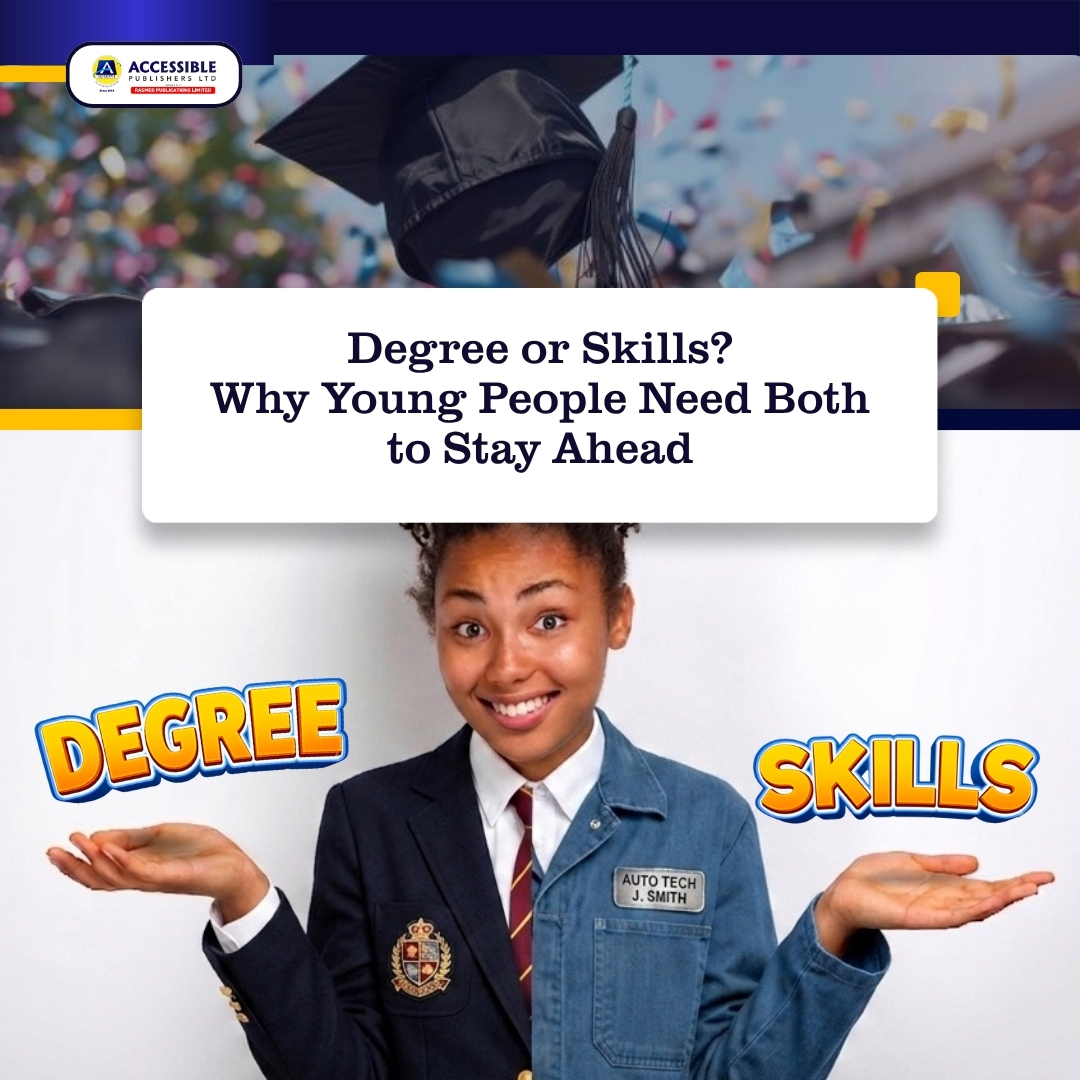
Every year, thousands of Nigerian youths graduate from schools and universities with high hopes of landing good jobs and building successful careers. Yet, many soon discover that having a certificate alone is no longer enough to stand out in today’s competitive world. At the same time, many skilled individuals without formal education also face limitations when trying to access certain career opportunities.
So, which matters more—your degree or your skills?
The truth is, this is no longer an either-or conversation. In today’s fast-changing world, young people need both academic qualifications and practical skills to remain relevant, adaptable, and employable.
As we commemorate World Youth Skills Day, it is important to remind students, parents, teachers, and school owners that preparing youths for the future goes beyond helping them pass examinations. It also means equipping them with the knowledge, competencies, and confidence to thrive in school, the workplace, and life.
As author Alvin Toffler wisely said:
“The illiterate of the 21st century will not be those who cannot read and write, but those who cannot learn, unlearn, and relearn.”
This perfectly captures what today’s learners need—a combination of quality education and lifelong skill development.
The Changing World of Work: Why Education Alone May Not Be Enough
The workplace has changed dramatically over the last decade. Technology, automation, artificial intelligence, remote work, and digital transformation continue to reshape industries across the world. Many jobs that existed a few years ago have evolved, while entirely new career paths are emerging every year.
Employers are no longer interested only in what appears on a certificate. They also want to know:
- Can you solve problems?
- Can you communicate effectively?
- Can you work with others?
- Can you adapt to change?
- Can you use technology confidently?
A university degree demonstrates that a person has completed structured academic learning. However, employers increasingly look for candidates who can also apply knowledge in practical situations.
For instance, a graduate in Accounting who understands data analysis software or digital financial tools may have an advantage over someone who relies solely on classroom knowledge. Likewise, a student studying English who possesses excellent writing, content creation, or digital communication skills can unlock more career opportunities than expected.
Education provides the foundation, but skills help individuals apply that knowledge in the real world.
The Value of Academic Qualifications in Building a Strong Career Foundation
Despite the growing emphasis on skills, academic qualifications remain extremely valuable.
A degree is much more than a piece of paper. It represents years of discipline, critical thinking, research, and structured learning. Many professions—including medicine, law, engineering, pharmacy, architecture, education, and accounting—still require recognised academic qualifications before individuals can practise.
Beyond professional requirements, higher education also helps students:
- Develop analytical and critical thinking abilities.
- Gain deep subject knowledge.
- Build research and problem-solving skills.
- Learn discipline and commitment.
- Access professional networks and career opportunities.
Academic education also teaches students how to think logically, evaluate information, and make informed decisions—qualities that remain valuable regardless of technological changes.
For many youths, a degree opens doors. Skills help them walk confidently through those doors.
Essential Skills Youths Should Develop for Future Opportunities
While academic excellence is important, every student should intentionally develop practical skills that complement classroom learning.
Some of the most valuable skills include:
1. Digital Literacy
Youths should be comfortable using computers, productivity tools, online research platforms, and digital communication technologies. Basic digital competence has become essential in almost every profession.
2. Communication Skills
Being able to express ideas clearly—whether verbally or in writing—is one of the strongest assets anyone can possess. Good communication improves teamwork, leadership, customer relationships, and career growth.
3. Critical Thinking and Problem-Solving
Employers value individuals who can analyse situations, identify challenges, and develop practical solutions rather than simply following instructions.
4. Creativity and Innovation
Innovation often begins with creativity. Youths who can think differently, generate fresh ideas, and improve existing processes are more likely to thrive in today’s economy.
5. Leadership and Teamwork
Success rarely happens in isolation. Learning how to work with others, resolve conflicts, and lead responsibly prepares students for future workplace environments.
6. Financial Literacy
Understanding budgeting, saving, investing, and responsible money management helps young people make wise financial decisions throughout life.
7. Emotional Intelligence
Managing emotions, understanding others, showing empathy, and maintaining healthy relationships are essential qualities in both personal and professional life.
8. Adaptability and Lifelong Learning
The willingness to continually learn new skills may become one of the greatest advantages in an ever-changing world.
How Students and Youths Can Balance Education With Skill Development
One common misconception is that students must finish school before learning practical skills. In reality, both can happen simultaneously.
Here are practical ways students can combine academics with skill development:
Make use of school holidays wisely. Instead of spending every holiday idle, enrol in short courses or attend skill acquisition programmes.
Take advantage of online learning platforms. Many reputable websites offer affordable or even free courses in digital marketing, graphic design, programming, writing, public speaking, data analysis, and other valuable skills.
Join school clubs and extracurricular activities. Debate clubs, literary societies, coding clubs, entrepreneurship groups, and student leadership positions help students build confidence and transferable skills.
Volunteer whenever possible. Volunteering provides real-life experience while developing communication, teamwork, leadership, and organisational skills.
Read beyond textbooks. Books on leadership, personal development, business, technology, and innovation broaden perspectives and inspire continuous learning.
Seek mentorship. Learning from experienced professionals can provide guidance, motivation, and valuable career insights that cannot always be found in classrooms.
Parents also have an important role to play by encouraging curiosity rather than focusing solely on examination scores. Likewise, schools can enrich learning by integrating practical projects, technology, entrepreneurship, and career development programmes into their curriculum.
As Benjamin Franklin famously said:
“An investment in knowledge pays the best interest.”
Today, that investment includes both academic knowledge and practical skills.
Conclusion
The future belongs to the youths who are prepared not only with certificates but also with competencies that solve real-world problems.
Degrees remain valuable because they provide knowledge, credibility, and professional opportunities. Skills are equally important because they enable individuals to apply that knowledge effectively, adapt to changing environments, and create lasting value.
Rather than asking whether a degree is better than skills, the better question is: How can young people develop both?
For students, this means embracing continuous learning inside and outside the classroom. For teachers, it means nurturing learners who can think critically and solve problems. For parents and school owners, it means creating environments where academic excellence and practical skill development go hand in hand.
This World Youth Skills Day, let us encourage every young person to become more than just certificate holders. Let us inspire them to become lifelong learners, skilled problem-solvers, and confident leaders who are ready for the opportunities of tomorrow.
Because in today’s world, a degree may open the door, but skills help you stay in the room and continue to grow.
Check out our literature catalogue to discover an array of titles that can help motivate children to keep turning the pages. It’s time to explore and embark on an enriching literary journey.
Click this link to learn more about us here!