
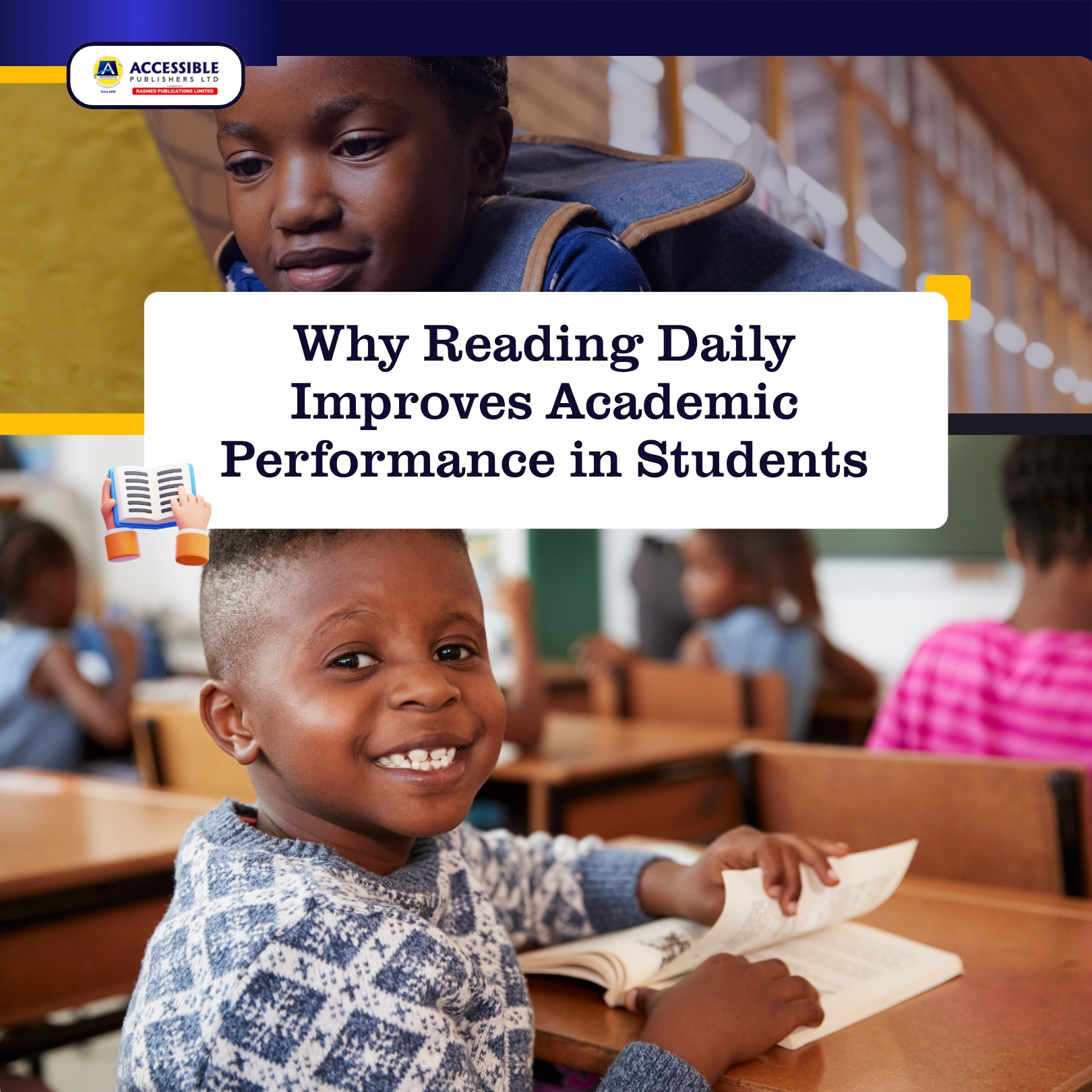
Imagine a student who approaches every subject with confidence—understanding questions clearly, expressing ideas effortlessly, and excelling in exams. What sets such a student apart is not just intelligence, but a simple, powerful habit: reading daily.
In today’s fast-paced world, where distractions are endless and attention spans are shrinking, consistent reading has become a rare but highly valuable skill. Yet, it remains one of the most effective ways to improve academic performance across all subjects.
As Francis Bacon rightly said, “Reading maketh a full man.” For students, it also makes them prepared, confident, and high-performing learners.
The Link Between Reading Habits and Academic Excellence
Strong reading habits are closely tied to academic success. Students who read regularly tend to perform better because they are constantly engaging their minds, expanding their knowledge base, and sharpening their thinking abilities.
Reading exposes students to new ideas, concepts, and perspectives that go beyond the classroom. This broader understanding helps them connect topics across different subjects, making learning more meaningful and less mechanical.
Furthermore, daily reading builds discipline. Just like consistent practice improves skills in sports, consistent reading strengthens cognitive abilities—leading to improved memory, focus, and analytical thinking.
How Daily Reading Improves Vocabulary and Communication Skills
One of the most noticeable benefits of reading daily is vocabulary development. Students encounter new words in context, which helps them understand meanings naturally and remember them more effectively.
A strong vocabulary is essential for:
- Writing clear and structured essays
- Understanding exam questions accurately
- Participating confidently in class discussions
Beyond vocabulary, reading improves overall communication skills. Students learn sentence structures, expressions, and ways of presenting ideas logically.
This is why students who read frequently often stand out—not just in written exams, but also in oral presentations and classroom interactions.
Reading Comprehension: The Foundation of Better Exam Performance
Many students struggle in exams, not because they lack knowledge, but because they misunderstand questions. This is where reading comprehension becomes critical.
Daily reading trains the brain to:
- Process information quickly
- Identify key points in a passage
- Interpret questions correctly
- Provide relevant answers
Subjects like English, Literature, Social Studies, and even Sciences require strong comprehension skills. For example, solving a word problem in Mathematics or understanding a theory in Biology often depends on how well a student can read and interpret information.
As the saying goes, “The more you read, the better you understand.” And the better you understand, the better you perform.
Best Types of Books for Improving Academic Performance in Students
Not all reading materials have the same impact. To improve academically, students should engage with a variety of purposeful and enriching content, such as:
Textbooks and Curriculum-Based Materials
These help reinforce classroom learning and deepen understanding of key topics.
Storybooks and Novels
They enhance imagination, improve language skills, and build reading fluency.
Biographies and Inspirational Books
These expose students to real-life experiences and motivate them to strive for excellence.
Educational Magazines and Articles
They keep students informed and improve their general knowledge.
A balanced reading habit that combines academic and leisure reading produces the best results.
Common Reading Challenges Among Students and How to Solve Them
Despite its benefits, many students struggle to develop a reading habit. Some common challenges include:
Lack of Interest
Many students see reading as boring or stressful.
Solution: Introduce engaging and relatable books that match their interests and reading level.
Digital Distractions
Phones, games, and social media often take priority over books.
Solution: Set specific reading times and create screen-free periods at home.
Poor Reading Skills
Some students find reading difficult due to limited vocabulary or slow comprehension.
Solution: Encourage guided reading, use simpler texts, and gradually increase complexity.
Inconsistent Reading Habits
Reading once in a while does not produce significant results.
Solution: Build a daily routine—even 15 to 20 minutes of reading can make a big difference over time.
With the right support from parents and teachers, these challenges can be overcome.
Conclusion
Reading daily is more than just an academic activity—it is a lifelong skill that shapes how students think, learn, and succeed. From improving vocabulary and comprehension to boosting confidence and exam performance, the benefits are far-reaching.
For parents, teachers, and school owners, the message is clear: encouraging consistent reading habits is one of the most impactful investments in a child’s academic journey.
When students read daily, they do not just prepare for exams—they prepare for life. Student
Check out our literature catalogue to discover an array of titles that can help motivate children to keep turning the pages. It’s time to explore and embark on an enriching literary journey.
Click this link to learn more about us here!