
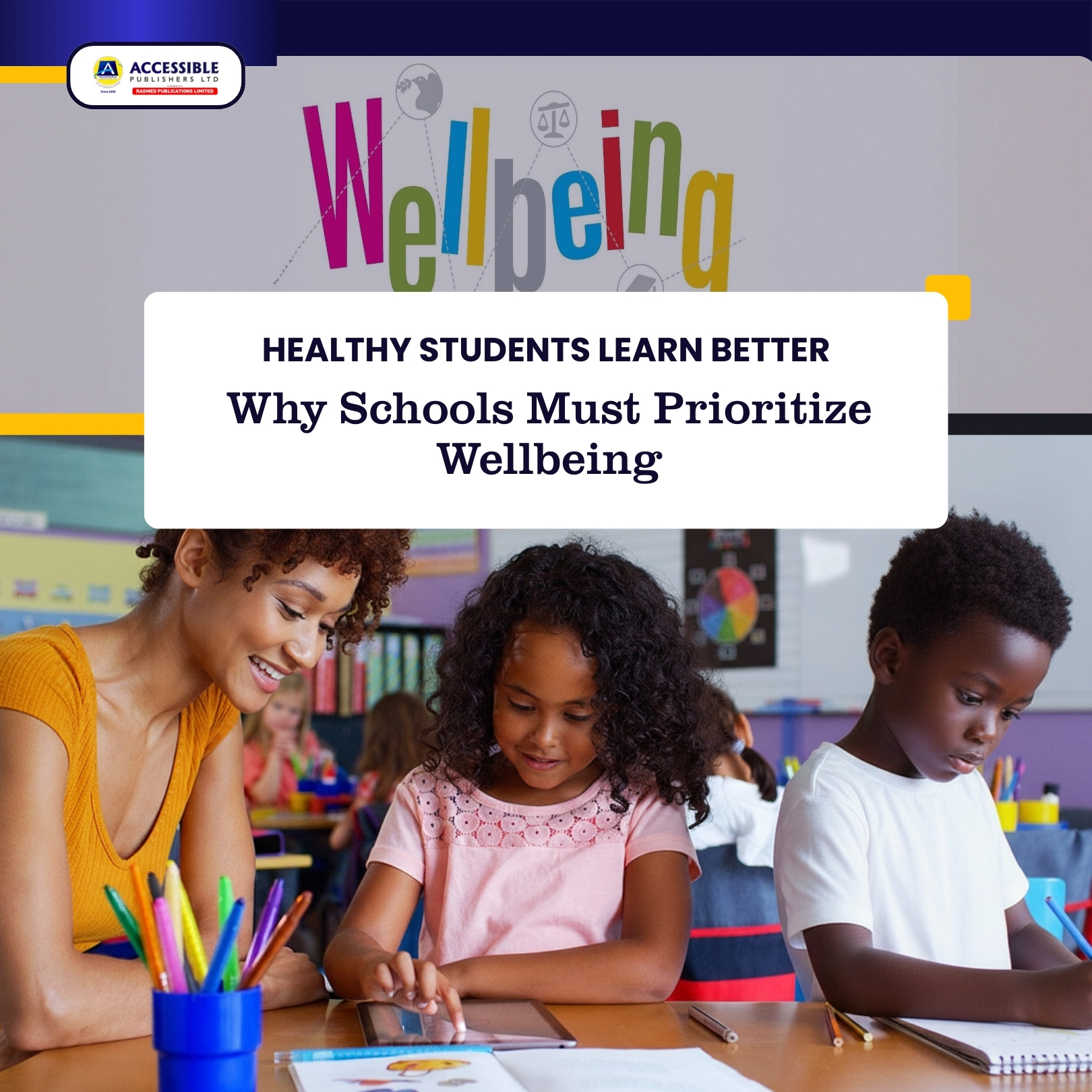
Education is often measured in grades, rankings, and examination results. Beneath every impressive academic record, however, lies something far more fundamental: the learner’s health and wellbeing. When a child is exhausted, anxious, or malnourished, even the most carefully designed instruction fails to achieve its full impact.
Consider, for example, a secondary school female student preparing for a major examination. She stays awake past midnight, revising, sacrificing sleep in the name of productivity. By morning, her body is present in the classroom, but her mind is clouded by fatigue. The teacher delivers a brilliant explanation of a complex concept, yet her concentration falters, and the lesson slips away. The problem is not intelligence; it is exhaustion.
That simple scenario reveals a deeper truth: academic potential cannot flourish where well-being is neglected. If education is truly about shaping futures, then well-being must be treated not as an accessory, but as its foundation.
The Role of Health in Student Success
Health and learning are inseparable. Cognitive development thrives when the brain is properly nourished, rested, and emotionally regulated. Research consistently shows that adequate sleep improves concentration and memory retention. Balanced nutrition enhances energy levels and attention span. Regular physical activity supports brain function and emotional stability.
But the issue goes beyond biology.
Mental health plays an equally decisive role. Students facing chronic stress, anxiety, or emotional instability often struggle with focus and motivation. In such cases, academic underperformance is not a sign of inability, but a signal of distress. The classroom is therefore not merely an intellectual space; it is a human environment. When schools ignore this reality, they inadvertently place unrealistic expectations on students. When they embrace it, performance improves organically.
Healthy students not only learn better but also participate more confidently, collaborate more effectively, and approach challenges with resilience.
Key Lifestyle Habits for Students
If well-being is foundational, what habits sustain it? Several stand out for students, including:
1. Adequate Sleep
Adolescents require between eight and ten hours of sleep per night. Sleep strengthens memory consolidation and improves mood regulation. Chronic sleep deprivation, by contrast, impairs decision-making and reduces academic performance.
2. Balanced Nutrition
Students need diets rich in fruits, vegetables, whole grains, and proteins. Excessive sugar and highly processed foods may lead to energy crashes and reduced attention span. Nutrition is not a peripheral concern; it is academic fuel.
3. Physical Activity
Exercise increases blood flow to the brain and releases endorphins that reduce stress. Even moderate daily movement, such as sports, walking, and stretching, contributes significantly to cognitive sharpness and emotional well-being.
4. Emotional Regulation and Social Connection
Strong peer relationships and supportive adult interactions enhance psychological stability. Teaching students coping skills, conflict resolution, and emotional awareness equips them to manage academic pressure constructively.
Benefits of Prioritising Wellbeing & How Schools Can Support It
Research continues to affirm a simple truth: when physical and mental health needs are met, cognitive performance improves. Healthy students are not only happier; they are more capable, focused, and resilient learners.
Placing student wellbeing at the centre of a school’s philosophy, therefore, extends its impact far beyond the individual learner. It improves attendance, strengthens engagement, and reduces disciplinary disruptions by equipping students with the skills and support to manage stress and resolve conflict constructively. The result is calmer classrooms, stronger peer relationships, with wellbeing and effective classroom management reinforcing one another.
The task, then, is not whether schools should prioritise wellbeing, but how. Integrating health education into the curriculum, providing access to counselling, protecting time for physical activity, and fostering partnerships with parents ensure that wellbeing is reinforced both inside and beyond the classroom.
Ultimately, student well-being does not compete with academic excellence. It drives it.
Conclusion
The question is not whether schools can afford to prioritise wellbeing. The real question is whether they can afford not to. If education is to fulfil its true purpose, it must look beyond examination scores. In the end, education is not simply about producing high achievers. It is about nurturing whole human beings. And when students are well, learning ceases to be a struggle and becomes what it was always meant to be: growth.
Check out our literature catalogue to discover an array of titles that can help motivate children to keep turning the pages. It’s time to explore and embark on an enriching literary journey.
Click this link to learn more about us here!