
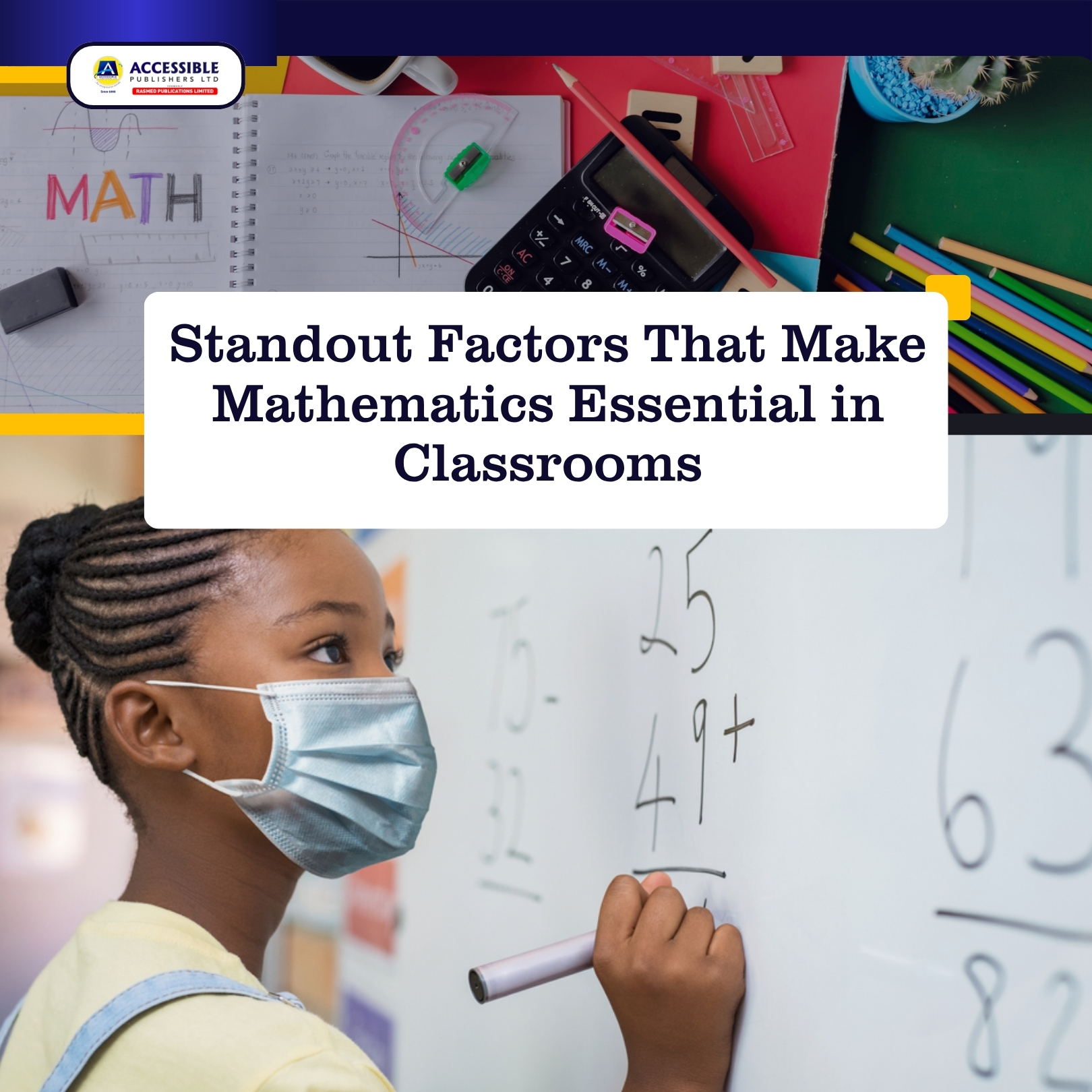
Mathematics is a fundamental part of human thought and logic, and integral to attempts at understanding the world and ourselves. In classrooms across the globe, mathematics is the heartbeat of critical inquiry. Its universality bridges cultures, disciplines, and generations, making it one of the few subjects that truly connect knowledge to real-life application.
But what exactly makes mathematics so essential in classrooms?
In this post, discover the magic behind numbers, why mathematics is indispensable in education, and how teachers and schools can make math learning engaging and meaningful for learners of all ages.
The Magic Behind Numbers
There is something truly fascinating about how numbers tell stories. From the rhythm of a musical composition to the architecture of ancient monuments, mathematics silently orchestrates order and beauty. It trains the human mind to find patterns and relationships in what may first appear as chaos. When a child solves a simple equation or identifies a geometric pattern, the brain is not just computing; it is reasoning, analysing, and creating meaning.
Mathematics also sharpens precision. It eliminates guesswork, demanding clarity of thought and expression. Moreover, mathematics inspires curiosity. Every formula carries a story of discovery, every theorem a legacy of intellectual struggle. This sense of exploration keeps learners mentally alert and imaginatively engaged. In that sense, the “magic” of mathematics lies not in the digits themselves but in their power to transform thought into understanding.
Mathematics and Its Essentiality
Mathematics holds a foundational position in education because it develops core cognitive abilities that no other subject fully replicates. The study of numbers cultivates a habit of structured thinking. In a basic classroom, for instance, when pupils use sticks or bottle covers to learn counting, they build logic in the process. This disciplined reasoning is what makes mathematics central to science, technology, engineering, and economics.
At a broader level, mathematics teaches universal literacy. In a digital era dominated by algorithms, data, and computation, mathematical competence has become synonymous with empowerment. A pupil who can calculate change after buying snacks, or who reads the time correctly before school, is already applying mathematical thinking in daily life. These small, routine encounters help children see mathematics not as an abstract subject, but as a useful life tool that builds confidence and independence.
Furthermore, mathematics strengthens communication and clarity of thought. Contrary to the notion that it is a “silent” subject, mathematics invites children to express how they arrived at their answers. For example, when a teacher asks, “How did you get 16 as your answer?”, a pupil learns to organise their explanation – “I added 8 and 8” – showing clear, logical communication.
Thus, the essentiality of mathematics at the basic level extends far beyond addition and subtraction. It lies in its power to shape how young learners think, organise, and interact with the world around them.
Steps to Making Mathematics Learning Worthwhile for Students
While the importance of mathematics is undisputed, ensuring that students experience its full worth requires intentional teaching practices. The following steps can transform how it is taught and perceived in classrooms. Schools and teachers should:
First, Contextualise Learning
Mathematics should never exist in isolation, especially for young learners who understand best through familiar objects and daily experiences. Teachers can connect lessons to real-life situations that children already engage with. For example, when teaching addition or subtraction, pupils can use local items such as bottle tops, crayons, or mangoes to act out the problem.
Second, Leverage Technology
The digital revolution offers countless resources for interactive learning – simulations, math games, virtual labs, and visualisation tools. These make abstract concepts tangible, especially for visual learners. Technology bridges the gap between understanding and application
Then, Celebrate Effort, Not Just Accuracy
Young learners often fear mathematics because it appears rigid or demanding. However, teachers can reshape this perception by valuing effort, persistence, and strategy as much as correct answers.
This reduces math anxiety and fosters confidence.
Likewise, Promote Collaborative Learning
It thrives on shared reasoning. Group tasks and peer discussions expose students to diverse problem-solving approaches. Collaboration enhances comprehension and develops teamwork.
Finally, Provide Continuous Assessment and Feedback
Constructive feedback helps students recognise their strengths and areas for improvement. Regular assessments, not as judgment but as guidance, build a growth-oriented learning culture.
By embracing creative teaching approaches, contextual relevance, and student-centred learning, educators can transform mathematics from a feared subject into a celebrated experience. The time has come!
Check out our literature catalogue to discover an array of titles that can help motivate children to keep turning the pages. It’s time to explore and embark on an enriching literary journey.
Click this link to learn more about us here!