
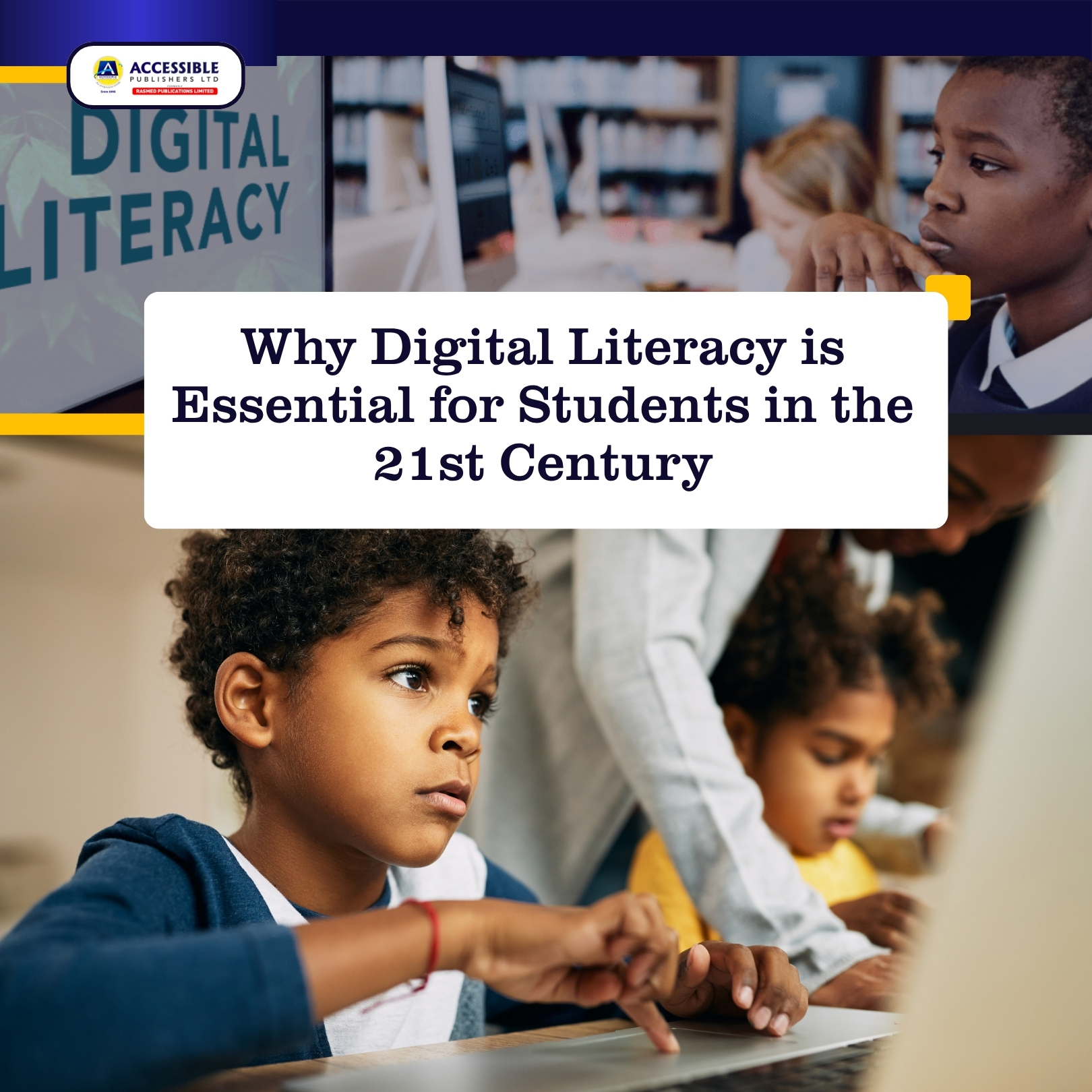
The 21st century is not just about technology; it is our everyday reality. This transformation marks a decisive shift for learners, as the age when literacy was confined to reading and writing on paper has given way to something far more complex and dynamic. As a result, knowing how to read and write is no longer enough. Students must now be able to find credible information online, avoid misinformation, and use digital tools effectively in their daily lives.
Digital literacy is no longer an advantage; it is a necessity. This blog, therefore, explores the 2026 theme for International Digital Learning Day, outlines the essential pillars of digital literacy, and highlights five key reasons every student needs these skills.
Decoding the 2026 Theme for International Digital Learning Day
The International Day for Digital Learning 2026 theme, “Building digital futures for public education”, captures a critical global concern: how to ensure that digital transformation in education is inclusive, structured, and beneficial for all. At its core, the theme raises an important question: Where are the trusted digital spaces for learning? Across many countries, students and teachers still struggle to find reliable online educational resources.
This theme reflects three key realities that continue to shape the future of education. To begin with, while digital learning is expanding rapidly across the world, its growth has not been entirely equitable. Many students still face challenges such as limited access to devices, poor internet connectivity, or inadequate digital infrastructure, creating a gap between those who can fully participate and those who cannot.
Beyond access, however, having devices and the internet does not guarantee meaningful learning.
More importantly, these challenges point to a larger shift that must take place. Public education systems are not meant to be replaced by digital platforms; rather, they must evolve alongside them. This means integrating technology in ways that strengthen teaching and learning, while ensuring that education remains inclusive, guided, and anchored in credible institutions.
Essential Pillars of Digital Literacy
Digital literacy is not a single skill; it is a combination of interconnected competencies:
1. Information Literacy
The ability to search, evaluate, and verify information online. Students must distinguish between credible sources and misinformation.
2. Technical Skills
Basic proficiency in using devices, software, and digital platforms, from word processors to learning management systems.
3. Media Literacy
Understanding how digital content is created and manipulated, including recognising bias, propaganda, and algorithmic influence.
4. Communication and Collaboration
Using digital tools (emails, forums, collaborative platforms) effectively and professionally.
5. Digital Ethics and Safety
Awareness of privacy, cybersecurity, digital footprints, and responsible online behaviour.
6. Creative and Critical Thinking
Using digital tools not just to consume content, but to create, innovate, and solve problems.
5 Reasons Every Student Needs Digital Literacy
Here are five compelling reasons every student must develop digital literacy skills.
1. Access to Unlimited Learning Opportunities
Digital literacy allows students to move beyond textbooks into global knowledge networks (online courses, virtual libraries, and interactive tools).
2. Employability in a Digital Economy
Virtually every profession now requires digital competence. From data analysis to remote collaboration, digital skills are foundational to modern careers.
3. Critical Thinking in an Age of Information Overload
The internet is saturated with information, both accurate and misleading. Digitally literate students can question, verify, and think independently.
4. Effective Communication in a Connected World
From emails to virtual meetings, digital platforms are now the primary means of communication. Students must learn the etiquette and efficiency of online interaction.
5. Participation in Civic and Global Life
Digital spaces are now arenas for public discourse, activism, and governance. Without digital literacy, students are excluded from participating meaningfully in society.
Conclusion
Digital literacy is the bridge between access and empowerment. The 2026 focus on building digital futures for public education underscores a deeper truth: the future of education is not just digital; it is intelligently digital. Thus, for students, digital literacy is not optional. It is the language of the present and the passport to the future.
Check out our literature catalogue to discover an array of titles that can help motivate children to keep turning the pages. It’s time to explore and embark on an enriching literary journey.
Click this link to learn more about us here!